

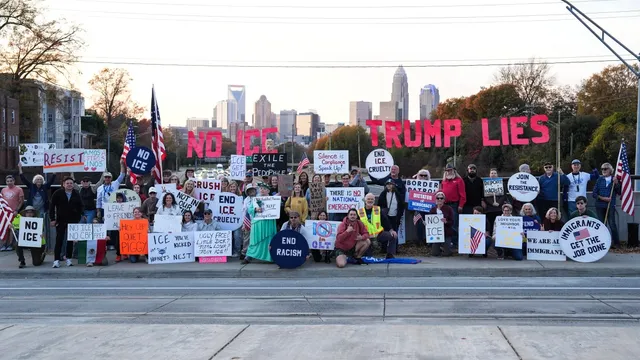
Trump's crackdown results in over 370 arrests in Charlotte
Trump's crackdown results in over 370 arrests in Charlotte
- The U.S. immigration enforcement operation 'Operation Charlotte's Web' led to the arrest of over 370 individuals in Charlotte, North Carolina.
- Local leaders and residents voiced concerns about racial profiling and the fear instilled in the community.
- The crackdown reflects the ongoing national enforcement strategy pursued by President Trump and has sparked significant dialogue about civil rights.
Story
In mid-November 2025, a federal immigration enforcement operation named 'Operation Charlotte's Web' was launched in Charlotte, North Carolina, resulting in the arrest of over 370 individuals within just five days. The operation was part of a broader crackdown on undocumented immigration under President Donald Trump's administration, with a focus on areas deemed high in crime. Federal officials reported that many of those detained had criminal histories including serious offenses such as aggravated assault and driving under the influence. However, local officials and community members expressed deep concern regarding the tactics employed during the operation, claiming that racial profiling and undue fear were instilled in the immigrant community. The crackdown prompted significant backlash from local Democratic leaders, including Charlotte Mayor Vi Lyles and North Carolina Governor Josh Stein, who criticized the operations as harmful to community relations and accused federal agents of targeting individuals based on their race. Mayor Lyles expressed concern for the community's well-being, particularly for residents who felt anxious and fearful due to the increased federal presence. The mayor urged federal agents to operate with respect for the city’s values. As the operation progressed, local businesses began feeling the impact, with residents refraining from stepping outside for fear of federal agents. In response to the outcry, the Mecklenburg County Sheriff Garry McFadden reassured the community that he would not participate in immigration enforcement, emphasizing a need for clarity and trust as they move forward. The operation culminated with federal authorities confirming the arrests, but also noting that regular ICE enforcement activities would continue in the area. The operations in Charlotte mirrored a series of similar actions taken by the Trump administration in other major cities, such as Chicago and Los Angeles. As the crackdown concluded, reports indicated that the Border Patrol would be mobilizing to New Orleans, Louisiana for its next enforcement action. Critics of the Trump administration's immigration policies have argued that such operations foster division within communities and fail to improve public safety, leading to ongoing tension between local governments and federal enforcement agencies.
Context
The Trump administration's immigration policies, particularly during the years of 2017 to 2021, were characterized by significant crackdowns aimed at reducing both legal and illegal immigration into the United States. Central to these efforts was the implementation of strict enforcement measures against undocumented immigrants. This included the expansion of ICE (Immigration and Customs Enforcement) operations and increased collaboration with local law enforcement agencies. As a result, there was a notable rise in the number of arrests and deportations, which the administration argued were necessary to enhance national security and uphold the rule of law. However, these actions sparked widespread controversy, leading to debate over the moral implications of such policies and their impacts on various communities across the nation. Another critical aspect of the Trump administration's approach to immigration involved the changes made to asylum procedures and refugee admissions. The administration sought to restrict asylum claims by implementing several policies, including the Migrant Protection Protocols (MPP), which required asylum seekers to wait in Mexico while their applications were processed. This led to significant humanitarian concerns, as individuals faced perilous conditions, including violence and insufficient resources while awaiting their hearings. Additionally, the administration imposed caps on refugee admissions, which hit historic lows, reflecting a dramatic shift from previous practices and sparking protests from immigrant advocates and human rights organizations. Family separation emerged as another hallmark of the administration’s immigration enforcement strategy, following the implementation of a "zero tolerance" policy on illegal border crossings. This policy resulted in thousands of children being separated from their parents and guardians, igniting nationwide outrage and condemnation from both domestic and international observers. The psychological and emotional toll on the affected families was profound, leading to long-lasting consequences for many children. Although the policy was eventually reversed amidst public outcry, the fallout from these separations highlighted significant flaws and ethical questions within the administration’s approach to immigration enforcement. The legacy of the Trump administration's immigration crackdowns continues to be debated and analyzed, particularly regarding their long-term effects on immigration reform and public sentiment toward immigrants in the United States. While supporters of the policies emphasized the need for border security and the protection of American jobs, critics argued that these measures caused unnecessary suffering and human rights violations. As the political landscape evolves, understanding the complexities of this era’s immigration policies remains crucial in navigating ongoing discussions about immigration reform and humanitarian responsibilities.


