
business
tragic
controversial

Coal town shifts to geothermal energy as jobs disappear

Dec 5, 2025, 3:06 PM10
(Update: Dec 5, 2025, 3:06 PM)
state of the United States of America

Coal town shifts to geothermal energy as jobs disappear

  • The Cooper family transitions from coal to geothermal energy as a response to mine closures.
  • Local businesses are adapting to the decline of the coal industry and exploring alternative energy sources.
  • This shift underscores the broader movement in Colorado towards renewable energy and away from fossil fuels.
Share your opinion
1

Story

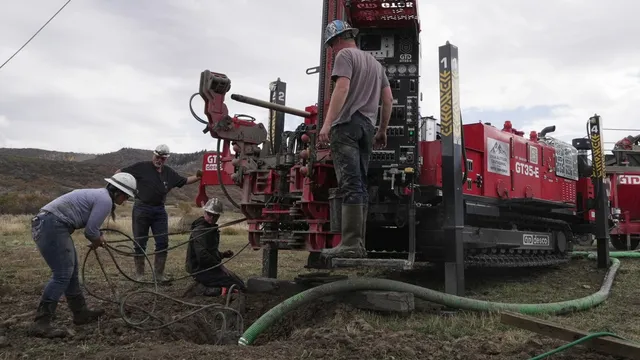
In Colorado, the Cooper family, long intertwined with the coal industry, faces a turning point as one of three local coal mines closes amid a broader shift towards cleaner energy sources. This change is spurred by state policies to close or convert existing coal-fired power plants and a consequential rise in the use of renewable energy, which presently accounts for over 40% of Colorado's power. The Coopers, having worked in coal for generations, are now investing in geothermal energy as their new family business, High Altitude Geothermal, adapting to the economic realities of a changing energy landscape and taking on the installation of geothermal heat pumps. While the families in Craig, Colorado, including the Coopers, plan their futures amidst the decline of the coal industry, there remains a palpable tension in the community regarding the influence of federal policies and leadership. Some locals still hold out hope that former President Donald Trump will intervene to maintain the remaining coal jobs and save the plants, while others, like Matt Cooper, recognize the necessity of embracing alternatives like geothermal energy. This signifies a substantial cultural and economic shift from reliance on fossil fuels to more sustainable options. As coal mines continue to close, leading to significant job losses, members of the community reflect on their uncertain future and the challenges posed by current energy transitions. Political discourse surrounding energy policies continues to sway between fossil fuel advocacy and renewable energy promotion, complicating the locals' situation. Despite the uncertainty, entrepreneurs in Craig, such as Wade Gerber, are finding new avenues in distilling spirits while simultaneously hoping for coal's revival. The community grapples with the legacy of being an energy hub, which is likely to morph into a focus on renewable resources. The statewide direction toward solar and wind energy, coupled with closures of older coal plants by 2031, stresses the need for adaptation within the community. Policymakers, including Governor Jared Polis, have emphasized the potential for innovation and job creation in renewable sectors, rather than an overreliance on outdated and polluting technologies. With these shifts in attitude, the Coopers and others exemplify the struggle of historic energy town communities transitioning toward greener alternatives while mourning the jobs once held dear.

Context

The impact of coal mine closures in Colorado presents a complex tapestry of economic, social, and environmental considerations that have significant implications for communities and the state at large. The decline of the coal industry, largely driven by the shift towards renewable energy and regulatory pressures aimed at reducing greenhouse gas emissions, has led to the gradual closure of several coal mines in Colorado. As a result, local economies that heavily relied on coal mining are facing stark challenges, including job losses, reduced economic activity, and declining revenues from coal-related taxes. The multifaceted effects of these closures ripple through communities, as families struggle to adapt to the loss of stable employment and the resulting financial strain. Many towns that were once thriving coal communities now confront the prospect of economic stagnation or decline as they grapple with the loss of a foundational industry. Moreover, the closures raise significant concerns regarding the reemployment of displaced workers. The skills garnered in coal mining are not directly transferable to many emerging job sectors, emphasizing the urgent need for robust retraining programs and support systems. Communities burdened by the sudden influx of unemployed individuals must navigate the complexities of social services, educational opportunities, and potential transitions to alternative energy sectors. Addressing these issues requires collaboration between local governments, private sectors, and non-profit organizations to forge pathways toward sustainable employment opportunities and economic resiliency. Furthermore, the environmental consequences of coal mine closures introduce a new set of challenges that must be systematically addressed. While the reduction of coal usage contributes positively towards decreasing carbon emissions and combating climate change, the neglected environmental impacts of abandoned mines pose long-term risks. Rehabilitation efforts are essential to mitigate the environmental damage caused by mining operations, including water contamination and habitat destruction. Effective land management strategies are needed to ensure that post-mining landscapes are restored in a manner that supports biodiversity and protects natural resources. This presents both a challenge and an opportunity for the state to innovate in reclamation practices that can facilitate the transition to a cleaner energy future. In conclusion, the ramifications of coal mine closures in Colorado extend beyond mere economic impacts; they weave into the fabric of social dynamics, environmental stewardship, and community resilience. Stakeholders must prioritize comprehensive strategies that address job displacement and environmental remediation while promoting diversified economic growth. By harnessing the collaborative potential of various sectors, there exists a window of opportunity to foster a transition that not only acknowledges the legacy of coal mining but also champions a sustainable and equitable future for affected communities.

2026 All rights reserved
