

Iran halts US negotiations amid escalating Israeli offensive in Lebanon
Iran halts US negotiations amid escalating Israeli offensive in Lebanon
- Iran has halted negotiations with the US due to the ongoing Israeli offensive in Lebanon.
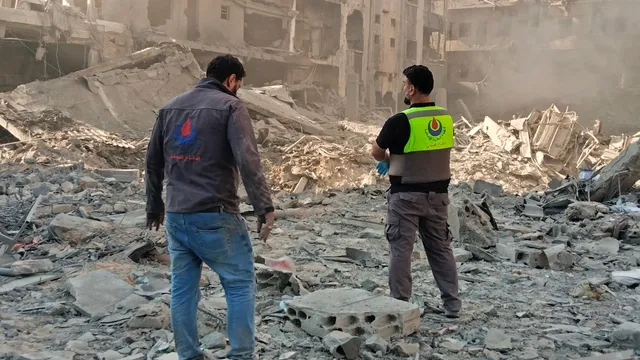
- The Israeli military has intensified its bombing campaign against Hezbollah, capturing strategic locations.
- Iran's demand for an immediate cessation of hostilities is a condition for resuming talks with the US.
Story
In recent days, Iran has taken significant steps in response to the escalating conflict in Lebanon, particularly due to the intensified Israeli military operations against Hezbollah. The Israeli military has been conducting a bombing campaign, targeting sites it claims are used by the militant group. This escalation has led to Iran's decision to halt negotiations with the United States, which were mediated by Pakistan. Iran's demands for an immediate cessation of hostilities in Lebanon and Gaza have become a condition for any further discussions with the US. The situation has been exacerbated by Israel's recent military advances, including the capture of Beaufort Castle, a historic site that provides a strategic vantage point in the region. Despite a ceasefire that was announced in mid-April, hostilities have continued, prompting Iran to reassess its diplomatic engagements. The Iranian government has reportedly ordered the blocking of maritime traffic through the Strait of Hormuz, a critical waterway for global oil shipments, as a show of its discontent with the ongoing violence. This move indicates a potential escalation in regional tensions, as Iran seeks to leverage its influence in response to the Israeli actions in Lebanon. The implications of these developments could have far-reaching effects on the geopolitical landscape in the Middle East, particularly concerning US-Iran relations and the broader conflict involving Israel and Hezbollah.
Context
Iran plays a pivotal role in Middle Eastern geopolitics, significantly influencing regional dynamics through its political, military, and economic strategies. As a major Shiite Muslim power, Iran's ideological stance often puts it at odds with Sunni-majority nations, particularly Saudi Arabia. This sectarian divide has fueled proxy conflicts across the region, with Iran supporting groups like Hezbollah in Lebanon and various militias in Iraq and Syria. The Iranian government views its regional influence as essential for its national security, often justifying its actions as a means to counter perceived threats from the United States and its allies, including Israel. This has led to a complex web of alliances and enmities that shape the geopolitical landscape of the Middle East. The nuclear program of Iran has been a focal point of international concern, leading to a series of negotiations and agreements, most notably the Joint Comprehensive Plan of Action (JCPOA) in 2015. However, the U.S. withdrawal from the agreement in 2018 and the subsequent re-imposition of sanctions have escalated tensions. Iran's response has included a gradual increase in its nuclear activities, which has raised alarms among its neighbors and the international community. The situation remains precarious, as Iran's pursuit of nuclear capabilities is viewed as a direct threat to regional stability and has prompted discussions about a potential arms race in the Middle East. Economically, Iran is heavily reliant on its oil exports, which are crucial for its economy but have been severely impacted by sanctions. The Iranian government has sought to mitigate these effects by strengthening ties with countries like China and Russia, which have provided economic support and military cooperation. This pivot towards the East reflects Iran's strategy to counterbalance Western influence and secure its interests in the region. Additionally, Iran's involvement in regional conflicts, such as the Syrian Civil War, has allowed it to project power and influence, further entrenching its role as a key player in Middle Eastern geopolitics. The future of Iran's role in the region is uncertain, as it faces both internal challenges and external pressures. Domestic discontent, driven by economic hardships and political repression, poses a significant threat to the regime's stability. Meanwhile, the evolving geopolitical landscape, including the normalization of relations between Israel and several Arab states, could further isolate Iran. As the Middle East continues to grapple with complex issues such as sectarianism, territorial disputes, and the quest for regional hegemony, Iran's actions will remain a critical factor in shaping the future of the region.


