

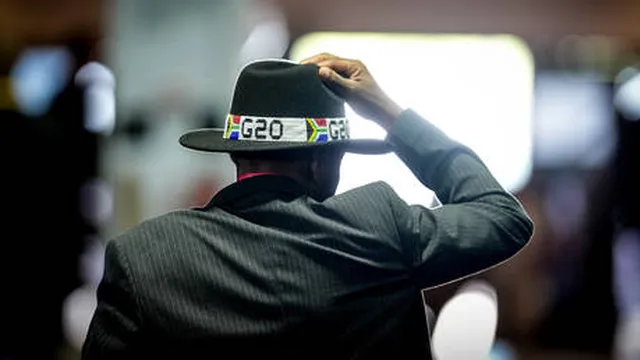
South Africa rejects US boycott and plans to attend G20 summit in 2026
South Africa rejects US boycott and plans to attend G20 summit in 2026
- South Africa has confirmed its attendance at the G20 summit in the US despite a US-led boycott.
- The country's leaders are urging other nations to reject exclusionary practices threatening multilateralism.
- South Africa's participation is crucial for addressing global issues such as poverty and climate change.
Story
In December 2025, South Africa asserted its commitment to attend the upcoming G20 summit to be held in the United States, despite the country's exclusion from future meetings as stated by US President Donald Trump. The announcement was made by Vincent Magwenya, spokesperson for President Cyril Ramaphosa, who urged other leaders not to participate in a boycott and emphasized the importance of collaboration among G20 members. South Africa's stance reflects a rejection of unilateral actions that threaten the collective integrity of the G20 bloc. The country highlighted its foundational role within the G20 and stressed the significance of addressing global challenges like poverty reduction and climate change. The context for this situation stems from the friction between South Africa and the United States over differing priorities and perspectives. The US had previously opted out of the G20 summit held in Johannesburg, citing issues with governmental laws and raising concerns about alleged racial injustices in South Africa. This boycott was perceived as detrimental to the G20's foundational multilateralism, raising alarms among other member states. As a founding member of the G20, South Africa expressed determination to champion issues pertinent to its continent and the world while criticizing the US's exclusionary measures. Vincent Magwenya highlighted that many other G20 countries have expressed solidarity with South Africa's position against the US's unilateral boycott, reinforcing the need for collective action against attempts to undermine the multilateral structure of the G20. Furthermore, as the global landscape evolves, the potential exclusion of countries like South Africa from critical discussions could jeopardize the G20's efficacy in addressing pressing global issues. South Africa's advocacy for inclusivity aims to ensure that topics such as equitable development and climate action remain central to the G20 agenda regardless of unilateral decisions made by powerful member states. In summary, South Africa’s decision to attend the G20 summit reflects a broader commitment to multilateralism and a challenge to exclusionary practices. The Johannesburg summit was a landmark event that symbolized Africa's increasing significance in global governance, emphasizing that matters affecting nations cannot be arbitrarily determined by one country alone. With President Ramaphosa reiterating South Africa's commitment to engagement, the country is positioning itself as a key player in the future of global economic governance and remains vigilant against threats to its participation in critical dialogues.


