

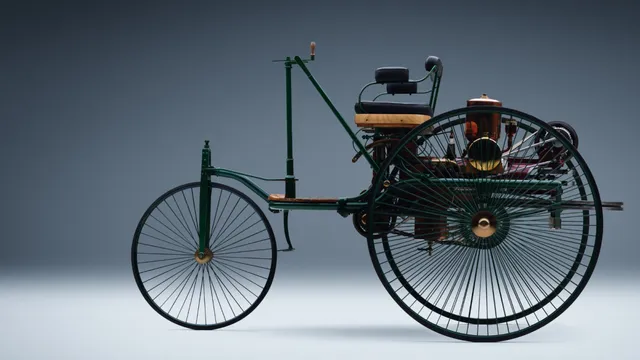
Mercedes-Benz celebrates 140 years of engineering innovation
Mercedes-Benz celebrates 140 years of engineering innovation
- Mercedes-Benz celebrates 140 years of automotive innovation and engineering.
- The company is launching a plan to modernize its vehicle lineup with over 40 new models.
- Emphasizing its engineering roots, Mercedes-Benz aims to advance sustainable transportation technologies.
Story
Mercedes-Benz is celebrating its 140th anniversary as a company rooted in engineering innovation. Founded on January 29, it traces its history back to Carl Benz, who patented the first automobile. This invention not only marked the birth of a company but also revolutionized personal mobility. The anniversary has prompted acknowledgments from automotive competitors, including BMW, highlighting the importance of Benz's invention in the industry. As part of its anniversary celebration, Mercedes-Benz has announced a significant modernization initiative, revealing plans to introduce over 40 new vehicles over the next two years. This will include a revamped S-Class, showcasing their continued commitment to integrating cutting-edge technology with safety and performance. Emphasizing its identity as an engineering company, Mercedes-Benz is also focusing on advancing technologies like solid-state batteries and in-wheel braking systems. Recent milestones, including the launch of the Vision EQXX concept car, which set a record by traveling 1,202 kilometers on a single battery charge, further illustrate the company’s focus on sustainable transportation. This concept played a crucial role in the development of models such as the CLA sedan and contributed to innovations within the AMG GT XX. These developments indicate Mercedes-Benz's strategic direction combining luxury, performance, and environmental consciousness. CEO Marcus Breitschwerdt reflects on historical milestones that shaped the company, including the introduction of lifesaving safety standards and ongoing engineering advancements aimed at enhancing individual mobility. As a historical leader in automotive technology, Mercedes-Benz continues to embody the spirit of invention that propelled its establishment over 140 years ago.
Context
The history of Mercedes-Benz dates back to the late 19th century, a time when the foundations of the automotive industry were being laid. The company’s origins can be traced to the invention of the first practical automobile by Karl Benz in 1886, which he named the Benz Patent Motorwagen. This groundbreaking vehicle operated on a gasoline-powered internal combustion engine and laid the groundwork for future innovations in automotive engineering. Concurrently, another pioneer, Gottlieb Daimler, invented a high-speed gasoline engine and his own automobile in 1886. In 1926, these two visionary entities, Benz & Cie. and Daimler-Motoren-Gesellschaft, merged to form the brand that is now globally recognized as Mercedes-Benz. The three-pointed star emblem, a symbol of luxury and performance, was adopted during this unification and has come to represent the brand's commitment to engineering excellence and innovation. After the merger, Mercedes-Benz began to solidify its position in the automotive market through the development of various advanced technologies. The early 20th century saw the introduction of the first four-wheel brake system and the launch of their luxury models, which were favored by the aristocracy and influential figures. During the post-World War II era, Mercedes-Benz emerged as a leader in safety features, introducing the crumple zone concept and anti-lock braking systems (ABS). The introduction of the Mercedes-Benz W111 in the 1960s is notable for its pioneering safety features, making it one of the first models to prioritize passenger safety as a fundamental design element. Throughout the subsequent decades, the brand continued to innovate, launching iconic models like the S-Class, which established benchmarks for luxury, comfort, and technology. The company ventured into performances vehicles with the AMG division in the 1960s, creating high-performance variants of their standard models that captured the attention of car enthusiasts and created a niche market for sports luxury vehicles. The introduction of the first diesel passenger car, the Mercedes-Benz 260D, in the 1930s set the stage for the brand’s ongoing commitment to sustainability and efficiency, a narrative that has continued into the present day with the development of hybrid and electric vehicles, like the EQ lineup. In the 21st century, Mercedes-Benz has responded to the evolving automotive landscape by embracing digital transformation and connectivity through initiatives like the MBUX infotainment system. With a focus on future mobility, the company is investing heavily in autonomous driving technologies and sustainable manufacturing practices, reflecting its commitment to environmentally conscious innovation. With over a century of legacy, Mercedes-Benz remains at the forefront of automotive engineering and luxury, continually redefined by its ongoing quest for excellence and its adaptability to an ever-changing market.


