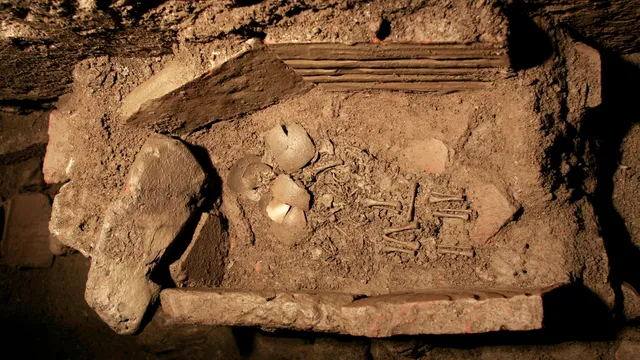
In Turkey, archaeologists have made a significant discovery of a burial site containing two premature infants believed to be twins. This rare find was located near the Temple of Artemis at Ephesus, a site known for its historical significance and one of the Seven Wonders of the Ancient World. The tomb dates back approximately 1,200 years to the Byzantine era, specifically the eighth to ninth century. The infants were likely born around 33 to 34 weeks of gestation, which is considered premature, and were buried in a stone-lined grave within an abandoned latrine channel. This unusual burial location raises questions about the burial practices of the time, particularly regarding the treatment of infants who died before baptism, as the site is outside the known cemetery grounds of Ephesus. The researchers, Caroline Partiot and Zabrana, noted that the burial may represent a compromise between Christian customs and local traditions. Additionally, one of the infants exhibited a rare genetic condition, a supernumerary cervical rib, which has not been documented in archaeological contexts before. The discovery highlights the family's intention to care for the deceased infants and acknowledges their brief existence within the community. The absence of the twins' mother in the vicinity of the burial site remains a mystery, with possibilities ranging from her simultaneous death to her absence from the area altogether. This finding not only sheds light on the burial practices of the Byzantine era but also emphasizes the significance of familial bonds and the care extended to deceased infants in ancient societies.