

U.S. forces capture Nicolás Maduro in military operation
U.S. forces capture Nicolás Maduro in military operation
- A large military operation in Venezuela led to the capture of Nicolás Maduro by U.S. special forces.
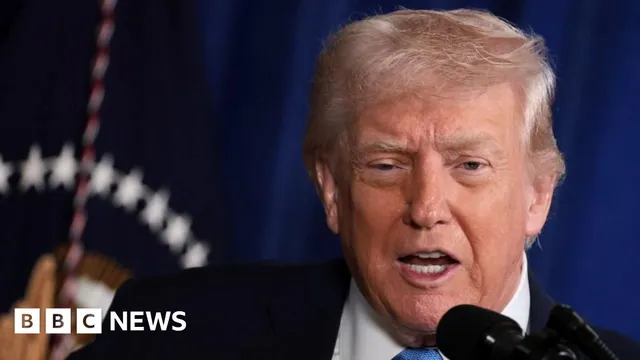
- Homeland Security Secretary Kristi Noem delivered President Trump's ultimatum to Venezuela's vice president, emphasizing a strong stance against dictatorship.
- The action raises questions about the legality and consequences of U.S. interventions in foreign governments.
Story
In a significant development in Venezuela, U.S. military forces launched a large-scale operation in Caracas that resulted in the capture of Nicolás Maduro and his wife. The operation was executed early on a Saturday morning, following extensive efforts by the Trump administration to combat alleged narco-terrorism linked to Maduro's regime. The capture aligns with U.S. strategies aiming to disrupt drug trafficking networks that have been exploiting Venezuela's resources. Following the operation, Maduro and his wife were transported to the United States to face charges relating to weapon and drug offenses. The situation escalated as Homeland Security Secretary Kristi Noem expressed the Trump administration's firm stance against the Venezuelan regime, framing the ultimatum to the vice president of Venezuela as a simple choice:
Context
Donald Trump's foreign policy in Latin America has been characterized by a focus on national sovereignty, security concerns, and economic nationalism. The administration's approach marked a shift from traditional diplomacy towards a more confrontational stance regarding issues perceived as threats to U.S. interests. This was largely reflected in its dealings with countries like Venezuela, Cuba, and Nicaragua, which were labeled as part of the "Troika of Tyranny." Trump's administration aimed to isolate these nations diplomatically and economically, imposing sanctions that sought to pressure their governments in an attempt to promote democracy and human rights. In Venezuela, the crisis was met with significant U.S. intervention, including recognition of opposition leader Juan Guaidó as the legitimate President of Venezuela in 2019. This decision was part of a broader effort to counter Russian and Chinese influence in the region. The U.S. not only applied severe economic sanctions on the Maduro regime but also engaged in various strategic partnerships with regional allies to support Venezuela's opposition. This policy resulted in a polarized response, with some Latin American countries supporting U.S. initiatives while others remained aligned with the Venezuelan government. Cuba also saw a reversal of the diplomatic thaw that had begun under the Obama administration. Trump reinstated travel restrictions and rolled back some economic measures that were intended to foster engagement. His administration's rhetoric highlighted the human rights abuses in Cuba and tied U.S. policy more closely to combating the regime's influence in the region. This included a hardline stance against Cuban support for Venezuela, viewing it as a destabilizing factor in Latin America. Trade policy under Trump was influenced by his "America First" doctrine, which aimed to prioritize American economic interests. The United States-Mexico-Canada Agreement (USMCA) was a central achievement for the administration, replacing NAFTA with provisions intended to benefit American workers and manufacturers. Additionally, Trump's administration engaged in negotiations aimed at securing deals with other Latin American countries, although the focus remained predominantly on bilateral agreements rather than multilateral relationships. Overall, Trump's foreign policy in Latin America reflected a blend of reactionary measures and assertive engagement, with long-term implications for U.S. influence and relationships in the region.


