

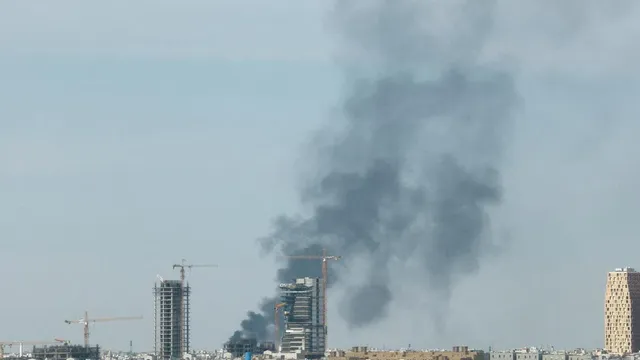
Riyadh faces unexpected missile threat before foreign minister meeting
Riyadh faces unexpected missile threat before foreign minister meeting
- On March 18, 2026, Riyadh's air defenses encountered a ballistic threat, marking a heightened security situation in the city.
- Residents reported hearing explosions and received phone alerts warning them of the incoming threat for the first time.
- The incident occurred just hours before a meeting of foreign ministers from several Arab and Islamic nations to discuss regional security.
Story
On March 18, 2026, Saudi Arabia experienced a significant security incident in its capital city, Riyadh, as air defense systems responded to what was described by state television as a ballistic threat. This marked a notable escalation in the region, which has been feeling the effects of ongoing military tensions related to the US-Israeli conflict with Iran. Residents reported hearing loud explosions and receiving alert messages warning them of an imminent aerial threat for the first time, signaling a new phase of anxiety among the population. Witnesses indicated that they observed missile interceptions occurring on the western edge of the city, particularly near the Diplomatic Quarter, which accommodates foreign missions, suggesting the seriousness of the threat. The Saudi government has been on high alert due to increasing hostilities that have targeted the nation with Iranian missiles and drones since the war on Iran commenced in February. Most of these threats have been successfully intercepted by Saudi air defenses. This incident happened just hours before a scheduled consultative meeting of foreign ministers from various Arab and Islamic nations aimed at discussing regional stability and security in light of the Iran conflict. Countries such as Azerbaijan, Bahrain, Egypt, Jordan, Kuwait, Pakistan, Qatar, Syria, Turkey, and the United Arab Emirates were set to participate, highlighting the international interest in the situation unfolding in the Gulf. Despite ongoing diplomatic efforts, nearly three weeks into the war, there are limited signs of de-escalation. The backdrop of military engagement has resulted in notable disruptions to global energy supplies, reflecting the broader implications of this regional conflict on international markets. The March 18 attack on Riyadh served as a stark reminder of the precarious security situation and the urgent need for collective dialogue among neighboring states to address the escalating tensions related to Iranian actions in the region.
Context
The impact of regional conflicts on global energy supply is a critical aspect of modern geopolitics, economic stability, and environmental concerns. Conflicts in key energy-producing regions can lead to significant disruptions in supply chains, affecting not only the countries directly involved but also global markets. For example, tensions in the Middle East, particularly in countries like Iraq and Iran, have historically resulted in fluctuations in oil prices and supply disruptions, contributing to economic challenges worldwide. Additionally, regional conflicts often lead to increased military presence or stricter regulations, further complicating the already fragile energy market. This interconnectedness of global energy dependence exemplifies how local disputes can escalate into worldwide economic ramifications, affecting everything from fuel prices to energy security in distant nations. Moreover, the rise of renewable energy technologies is both a mitigating factor and a complicating one in the context of regional conflicts. On one hand, advancements in solar, wind, and other renewable energy sources provide an alternative to fossil fuels, potentially reducing the impact of conflicts in oil-rich regions. On the other hand, the transition to renewable energy is still heavily reliant on resources that can be subject to geopolitical tensions, such as lithium, cobalt, and rare earth elements. These materials are essential for batteries and electronic components found in clean energy technologies. As nations strive to secure these resources, competition may lead to conflicts if access is threatened, mirroring the historical dependence on oil and gas. Furthermore, the global energy market's reaction to the uncertainties stemming from regional conflicts can lead to increased volatility. Market speculators often drive prices higher in anticipation of supply disruptions, which can create a cycle of uncertainty. Countries dependent on imported energy may find themselves vulnerable to price shocks, subsequently affecting their economies. Long-term contracts may provide some buffer against these shocks, but they also tie countries to specific suppliers, potentially limiting flexibility. The response of governments to such conflicts often includes diversifying energy sources and investing in strategic reserves, yet these measures require time and significant financial investment to be effective. Ultimately, the relationship between regional conflicts and global energy supply highlights the intricate web of geopolitics, economic strategy, and environmental policy. As nations continue to navigate these issues, the need for diplomatic solutions and international cooperation becomes apparent. Striking a balance between energy security, economic stability, and sustainable practices is vital for global stability. Future efforts to address regional conflicts must consider not only the immediate implications for energy supply but also the long-term impacts on global relations and the environment. The ongoing evolution of the energy landscape demands a proactive approach to avoid the pitfalls of past disputes, ensuring a more stable energy future.


