

China launches naval patrols around Scarborough Shoal amid tensions
China launches naval patrols around Scarborough Shoal amid tensions
- China has stepped up combat readiness patrols around Scarborough Shoal as of January 31, 2026, claiming sovereignty over disputed areas.
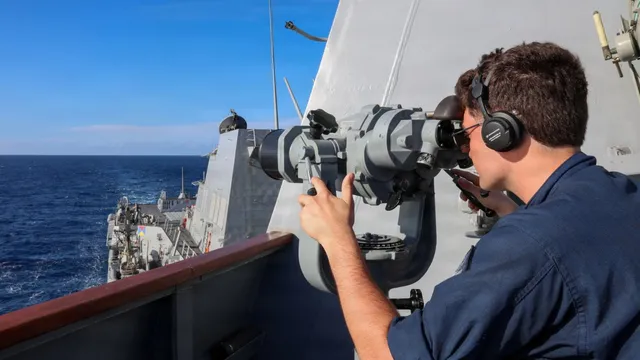
- The Philippines and the U.S. conducted a Maritime Cooperative Activity to strengthen military ties and ensure maritime security.
- The ongoing tensions in the South China Sea highlight the strategic rivalry between the U.S. and China, affecting regional stability and alliances.
Story
On January 31, 2026, China conducted naval and air patrols around Scarborough Shoal, a region claimed by both China and the Philippines, emphasizing its claim to the area. This shoal lies within the Philippines' exclusive economic zone and has been a point of contention between the two nations since China took control in a standoff in 2012. The Philippine military has expressed its concerns regarding China’s aggressive stance and activities in the South China Sea, which include joint military exercises with the United States, aimed at enhancing defense capabilities and maritime security. These activities are part of a broader strategy by both the U.S. and Philippines to reinforce their military cooperation amid rising Chinese assertiveness. The backdrop to these developments includes the U.S.'s ongoing efforts to uphold a rules-based international order in the Indo-Pacific region, balancing against China’s increasing military presence and patrolling activities in contested areas. The situation remains tense, with potential for future conflict as military maneuvers are expected to continue from both sides. The U.S. has reiterated its commitment to freedom of navigation in the region, countering China's claims and ensuring support to its allies. In this complex geopolitical landscape, the actions taken by both China and the U.S. will likely have longstanding implications for regional stability, affecting not only U.S.-Philippines relations but also relationships with other Southeast Asian nations. Continued U.S. military exercises and the response from Chinese forces indicate that tensions in the South China Sea will persist as all parties seek to assert their territorial claims and influence.
Context
The current state of U.S.-Philippine military relations is characterized by a combination of historical alliances, strategic interests, and evolving geopolitical dynamics in the Asia-Pacific region. The partnership between the United States and the Philippines has deep roots, dating back to the early 20th century, but it has gained renewed significance in recent years due to increasing tensions in the South China Sea and the growing military assertiveness of China. This relationship is fundamentally anchored in the Mutual Defense Treaty (MDT) established in 1951, which commits both nations to defend each other in the event of an armed attack. The MDT, along with additional agreements such as the Enhanced Defense Cooperation Agreement (EDCA) and the Visiting Forces Agreement (VFA), fosters closer military ties and enables joint training, humanitarian assistance, and disaster relief operations. In recent years, military exercises between the U.S. and the Philippines have expanded considerably, demonstrating solidarity and mutual preparedness. These exercises, including the Balikatan (Shoulder-to-Shoulder) exercises, not only bolster combat readiness but also enhance interoperability between the two forces. Moreover, the Philippines has increasingly become a critical partner for the United States in its strategy to maintain a rules-based international order in the region. The Philippines acts as a strategic hub and a potential staging ground for U.S. forces, thereby facilitating rapid response capabilities in times of regional crises or conflicts. Despite the firm military ties, there are challenges that continue to influence this relationship. Shifts in the political landscape of the Philippines, including changes in administrative priorities, have affected the dynamics of military cooperation. The country’s government has pursued an independent foreign policy while balancing its relations with both the United States and China. This has caused fluctuations in the level of engagement with U.S. forces, particularly regarding the presence of American troops in the Philippines. Domestic sentiments regarding U.S. military involvement and critiques of past military practices have also led to growing nationalist sentiments that call for a reassessment of foreign military bases and operations on Philippine soil. Overall, the U.S.-Philippine military relationship plays a vital role in ensuring regional security and stability. This partnership is likely to continue adapting to both national interests and changing regional security paradigms. The mutual commitment to addressing shared threats and enhancing defense capabilities, combined with a focus on cooperative regional initiatives, underscores the importance of this alliance. With the complex realities of the current geopolitical landscape, maintaining strong U.S.-Philippine military relations will be crucial as both nations navigate challenges such as addressing natural disasters and countering terrorism, all while managing influential regional powers.


