politics
controversial
impactful

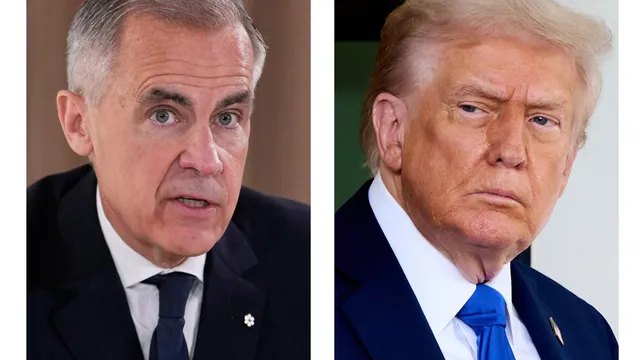
Trump threatens Canadian tariffs over China trade deal

Jan 24, 2026, 6:14 AM160
(Update: Jan 26, 2026, 7:09 PM)
country in North America
capital city of Canada
state of the United States of America
president of the United States from 2017 to 2021
social networking service created by Trump Media & Technology Group
country in East Asia
country primarily in North America
autonomous country within the Kingdom of Denmark on world's largest island by the same name

Trump threatens Canadian tariffs over China trade deal

  • President Donald Trump has threatened to impose 100% tariffs on Canadian goods if Canada engages in a trade deal with China.
  • The Canadian Prime Minister, Mark Carney, aims to diversify Canada's economic partnerships while defending against U.S. pressure.
  • This growing tension illustrates a significant shift in U.S.-Canada relations, especially over trade and international alliances.
Share opinion
Tip: Add insight, not just a reaction
16

Story

In early January 2026, tensions escalated between the United States and Canada when President Donald Trump openly threatened to impose a heavy financial penalty on Canadian imports. This threat was specifically targeted at the possibility of Canada entering into a trade agreement with China, which Trump labeled as an unacceptable action. The U.S. president asserted that if Canadian Prime Minister Mark Carney proceeded with negotiations marking Canada as a 'Drop Off Port' for Chinese goods intended for the U.S., significant tariffs would ensue. This statement has marked a stark warning reflecting the ongoing struggle in U.S.-Canada relations over trade policies. In conjunction with these recent threats, President Trump expressed dissatisfaction with Canada's opposition to a U.S.-proposed missile defense system, the 'Golden Dome,' which aims at establishing a protective measure inspired by Israel's Iron Dome. Trump argued that such a system would notably benefit Canada, claiming their refusal to cooperate represents a shift towards aligning with China instead. These comments have been attributed to Trump's broader strategy to increase U.S. influence in the Arctic region, particularly against perceived threats from rival powers like China and Russia. Prime Minister Mark Carney responded to Trump's critiques by asserting Canada’s autonomy and success outside of U.S. influence. His remarks came following his recent diplomatic visit to China and the announcement of a new strategic partnership aimed at enhancing trade and investment connections. Carney emphasized that Canada is committed to diversifying its economic partnerships and will not simply capitulate to U.S. demands or threats. The situation has incited various reactions within Canada, with observers noting that Prime Minister Carney’s government is attempting to navigate the complexities of international relations, balancing its robust trading ties with the U.S. while also seeking opportunities for growth in partnerships within Asia, especially China. The evolving context indicates a growing re-evaluation of economic dependencies within North America, and the conversations happening now could shape the future of trade relationships between these nations significantly.

Context

The Canada-China trade deal implications present a multifaceted scenario that can significantly impact both economies. The deal, which aims to enhance economic cooperation between Canada and China, is pivotal given China's status as one of Canada’s largest trading partners. The Canadian economy is projected to benefit from increased access to the Chinese market, particularly for key sectors including agriculture, natural resources, and technology. China’s growing demand for resources can stimulate Canadian industries, thereby fostering job creation and economic growth. However, the trade deal's success hinges on navigating potential geopolitical tensions and ensuring fair trade practices, as both countries face scrutiny regarding their standards and regulations. Trade deals often come with a set of challenges and criticisms. There are concerns over the implications for Canadian labor and environmental standards, especially considering the divergent regulatory frameworks. Critics argue that increased trade could lead to job losses in certain industries and potential environmental degradation if regulations are compromised for the sake of economic growth. Therefore, it is imperative for Canada to maintain its commitment to ethical trade practices while engaging with China. Moreover, the deal may draw opposition from those who fear that Canadian sovereignty could be undermined by the economic influence of a major global power like China. Geopolitically, the trade deal is also influenced by the shifting dynamics in international relations. Canadian and Chinese relations have experienced fluctuations, particularly in the wake of incidents concerning human rights, espionage, and diplomatic relations. These geopolitical considerations may impact the momentum and effectiveness of the trade deal. Any deterioration in relations could lead to a more significant economic fallout, affecting other sectors and trade agreements both bilaterally and multilaterally. Thus, Canada must strike a balance between economic benefits and national interests within the broader geopolitical landscape. An evaluation of the trade deal’s implications should include robust monitoring and continuous assessment of its effects on domestic industries and international reputation. Engaging stakeholders from various sectors, including labor groups, environmental advocates, and trade experts, can provide a more comprehensive understanding of the trade deal's ramifications. Ultimately, the success of the Canada-China trade deal will depend not only on economic gains but also on the ability to navigate the complex web of diplomatic relations, regulatory standards, and public perception. By addressing these challenges judiciously, Canada can maximize its benefits while minimizing risks associated with engaging with China.

2026 All rights reserved