
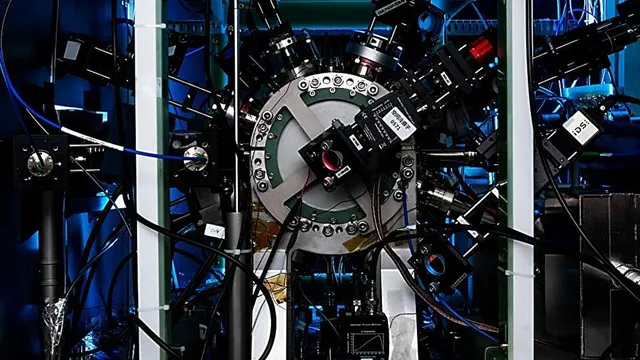
Chinese scientists create groundbreaking optical clock redefining time
- Chinese scientists developed an optical clock that can remain accurate for about 30 billion years.
- This clock’s precision opens doors to high-resolution observations and testing fundamental physics principles.
- The advancements may lead to redefining the second, enhancing various scientific and technological applications.
Story
In recent months, researchers at the University of Science and Technology of China have developed an optical clock marked by its unparalleled accuracy. This clock demonstrates an ability to lose or gain less than one second over approximately 30 billion years, a remarkable feat emphasizing its potential to redefine the measure of a second. Unlike traditional timekeeping methods, this optical clock relies on the frequency of light emitted during the transitions of electrons between energy levels in atoms. Such technological advancements provide promising prospects for various scientific and practical applications. The implications of this precision reach far and wide, as optical clocks may serve as crucial references in modern technology. They can enhance satellite navigation, improve telecommunications infrastructure, and offer remarkable accuracy in precision measurements which could fundamentally change how certain scientific investigations are approached. A key driver behind this research stems from the limitations observed in previous timekeeping devices, particularly atomic clocks, which have been the standard since the second was defined by oscillations of the caesium-133 atom in 1967. Embracing the advancements of optical clocks could offer a better pathway towards even finer measurements and observations in multiple scientific disciplines. Moreover, these developments bolster the search for elusive concepts in physics, such as dark matter and gravitational waves. Researchers suggest that the new clock's performance meets the accuracy requirements necessary for redefining the International System of Units (SI) second. Further, at least three of these innovative optical clocks are required to achieve this new standard—highlighting a collaborative effort across various institutions to achieve profound advancements in our understanding of time and physics. As collaboration continues, the use of optical clocks may expand into various fields, allowing for minute observations concerning gravity and altitude changes. Their potential also extends to geological applications, tracking shifts in the Earth’s crust and groundwater fluctuations, and even monitoring volcanic activity. This capability enhances scientists' efforts to analyze and interpret complex physical phenomena, indicating a forward leap in scientific methodology. As more optical clocks demonstrate similar or improved precision, the redefinition of the second is becoming a tangible reality, promising a future where timekeeping transcends previous limitations.
Context
The measurement of time has undergone significant transformations throughout history, reflecting advances in society's understanding of natural phenomena and technological capabilities. Early timekeeping devices were remarkably simple, relying on the consistent movements of celestial bodies. Ancient civilizations, such as the Egyptians and Babylonians, utilized sundials and water clocks to measure time. These devices served practical purposes in agriculture and daily life, marking seasonal changes and guiding activities. Over the centuries, mechanical clocks emerged, culminating in the creation of pendulum clocks in the 17th century, which offered unprecedented accuracy. However, these early inventions still could not match the precision required for scientific endeavors. The quest for a standard definition of time led to a pivotal moment in the 19th century with the establishment of time zones and the adoption of mean solar time. This period also saw the introduction of the second as a unit of measure. Originally defined as 1/86,400 of a mean solar day, this definition connected time measurement to the Earth's rotation. However, as scientific knowledge expanded, particularly in the study of atomic physics, the need for a more precise measurement of time became apparent. This realization was driven by the limitations of astronomical timekeeping, which were subject to irregularities due to various factors, including shifts in the Earth's rotation. The redefinition of the second in 1967 marked a transformative moment in the history of time measurement. The second was redefined in terms of the vibrations of cesium atoms, specifically as the duration of 9,192,631,770 cycles of the radiation corresponding to the transition between two hyperfine levels of the ground state of the cesium-133 atom. This atomic standard provided an extremely stable and reproducible reference for timekeeping, leading to the development of atomic clocks that achieved unprecedented precision. These advancements laid the foundation for the Global Positioning System (GPS) and other technologies that rely on precise timing for their functionality. As of today, the quest for precision continues, with ongoing advancements in optical lattice clocks and other technologies that promise even greater accuracy. The potential for redefining the second again based on new physical phenomena highlights the dynamic nature of time measurement. The evolution of timekeeping reflects humanity's broader journey in mastering the measurement of time, from the natural rhythms of the cosmos to atomic precision, constantly pushing the boundaries of how we understand and utilize this fundamental quantity.
