

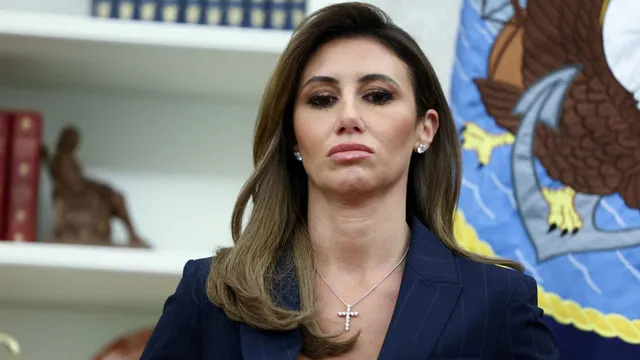
Alina Habba unlawfully serves as New Jersey's top federal prosecutor
Alina Habba unlawfully serves as New Jersey's top federal prosecutor
- Alina Habba faced a legal setback when the U.S. Court of Appeals ruled her appointment as the acting U.S. Attorney in New Jersey was unlawful.
- The ruling questioned the legality of Trump's appointments and highlighted issues with adherence to federal vacancy laws.
- This decision complicates the landscape for Trump's nominees and reflects broader concerns about executive power in federal appointments.
Story
In the context of a significant legal ruling, Alina Habba, affiliated with former President Donald Trump, faced a substantial setback as the U.S. Court of Appeals for the Third Circuit determined that her tenure as the acting U.S. attorney in New Jersey was unlawful. This decision was based on the court's agreement with a lower court's assessment that Habba's appointment circumvented required legal protocols, raising concerns about constitutional implications. The ruling highlighted broader issues surrounding Trump's efforts to install preferred nominees in U.S. attorney positions, especially within blue states like New Jersey, where the political landscape is predominantly Democratic. Habba, known for her advocacy of Trump’s policies, particularly regarding immigration, had previously served as his personal defense lawyer. The ruling poses significant implications not only for Habba’s career but also for ongoing prosecutions she was involved in, as defense attorneys challenged her legitimacy in court. The appellate court's decision reflects a growing trend of legal hurdles faced by Trump's appointees, as many seek to navigate complex political dynamics while adhering to judicial standards. This multifaceted situation unfolds against a backdrop of heightened scrutiny regarding the transitions of power within law enforcement and the judiciary, particularly during shifts from one administration to another. Trump's administration has been criticized for allegedly exploiting loopholes in federal vacancy laws, which allowed for rapid appointments without the typical Senate confirmations. The uncertainty surrounding appointments in the context of political opposition also reflects on broader governance issues in the U.S., emphasizing the need for transparent and legally sound protocols in federal appointments. As litigation progresses, the future of appointments and prosecutions led by figures like Habba draws attention, reigniting debates about executive power and its constraints. The implications of this ruling for Trump's broader legal strategy remain to be seen, as the former president continues to assert influence over his allies in various legal and governmental fronts.
Context
Immigration policies have significant implications for law enforcement practices and community relations in the United States. The landscape of immigration has evolved, leading to diverse approaches at federal, state, and local levels. Law enforcement agencies often find themselves at the intersection of enforcing laws and maintaining public safety, with immigration policies influencing their operations. Striking a balance between addressing crime and building trust within immigrant communities is critical, and policies that create a chasm between law enforcement and community members can hinder public safety initiatives. When immigrants feel vulnerable or fear deportation, they may be less likely to report crimes or cooperate with authorities, which can ultimately exacerbate issues of crime and safety in those neighborhoods. The implementation of policies such as Secure Communities, which mandated local law enforcement to assist with the identification and deportation of undocumented immigrants, showcased a strong federal role in immigration enforcement. However, this led to mixed reactions among local law enforcement agencies. Some viewed it as an essential tool for reducing crime, while others criticized it for increasing fear within immigrant communities and damaging relationships built over years. The resultant erosion of trust can lead to a cycle where immigrant victims and witnesses avoid contact with police, hindering investigations and creating obstacles to effective law enforcement. Furthermore, the politicization of immigration policies has led to divisions within communities and among law enforcement personnel. Many agencies have chosen to adopt policies aimed at protecting vulnerable populations, such as creating sanctuary jurisdictions that limit cooperation with federal immigration authorities. These policies arise out of a need to foster community trust and focus resources on addressing local crime rather than immigration enforcement. However, they are often met with pushback from federal authorities, leading to a complex and often contentious relationship. This tension highlights the differing viewpoints on the role of law enforcement in immigration matters, prompting discussions on best practices and collaborative approaches that respect both community safety and human rights. In conclusion, the impact of immigration policies on law enforcement is profound and multifaceted. Effective law enforcement relies on trust between police and community members, and any policies that create fear or division can undermine this essential relationship. As communities continue to evolve, law enforcement agencies must navigate the dual responsibilities of enforcing laws and protecting public safety while forging strong, collaborative relationships with the diverse populations they serve. Future approaches should emphasize community engagement, focusing on strategies that allow for effective policing while respecting the dignity and rights of all residents.


