

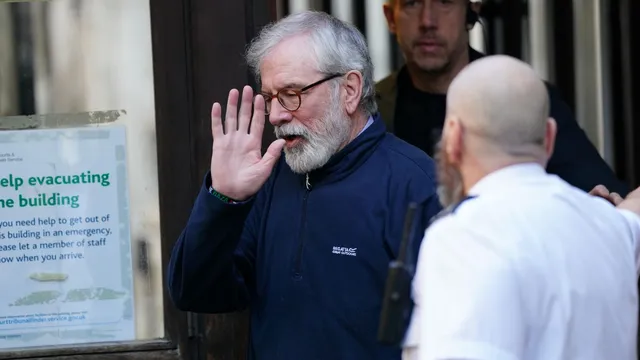
Gerry Adams denies role in IRA bombings during court hearing
Gerry Adams denies role in IRA bombings during court hearing
- A civil trial is currently taking place in London involving Gerry Adams, who is accused of involvement in IRA bombings.
- The claimants are three victims seeking damages and presenting evidence linking Adams to major bombing decisions.
- Adams firmly denies these allegations, stating he was never a member of the IRA and advocating for peace in Northern Ireland.
Story
In a civil trial in London, Gerry Adams, the former president of Sinn Féin, has begun testifying in response to allegations of his involvement in IRA bombings during the 1970s and 1990s. The trial features three claimants who were victims of such attacks, namely John Clark, Jonathan Ganesh, and Barry Laycock, seeking a small sum of damages based on the claim that Adams was complicit in their injuries due to his supposed senior role within the Provisional IRA. Claims present evidence and testimonies suggesting Adams had significant involvement in major bombing decisions, including those relating to the notorious Old Bailey bombing and others in London and Manchester. During his testimony, Adams, who is now 77 years old, vehemently rejected all allegations, stating he was never part of the IRA or its Army Council and claiming he has always sought peace in Northern Ireland. His legal team has argued that the case is built on hearsay and has been filed far too late to be valid. Adams expressed sympathy for the claimants but maintained that they should not take his statement as criticism of their suffering and experiences. As the trial unfolds, it has been highlighted that Adams had previously responded to similar accusations during other judicial proceedings, underlining the complexities still surrounding discussions of the IRA and its historical actions. The nuanced expressions of Adams about his past, while addressing the court, illustrate his broad stance on the matter; he acknowledged the violence associated with the IRA activities, but underscored the right to resist occupation. As the proceedings likely conclude later this month, the case not only addresses individual grievances of the victims but also focuses on the continuous impact of historical conflict in Ireland, as well as the lingering questions surrounding the legacy of political figures involved in that tumultuous era. Adams's assertions come at a time of significant memory and interpretation of the conflict, leading to ongoing debates about collective responsibility and the long-lasting scars left on the societies affected.


