

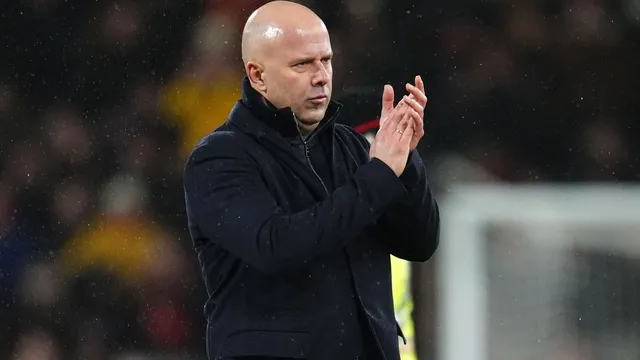
Carragher warns Slot faces sacking if Liverpool misses Champions League
Carragher warns Slot faces sacking if Liverpool misses Champions League
- Arne Slot's Liverpool has struggled this season, highlighted by a recent defeat that pushed them out of the top four.
- Jamie Carragher believes Slot's position may be at risk without Champions League qualification.
- Failure to attain European competition will raise serious questions about Slot's future as Liverpool manager.
Story
In January 2026, Jamie Carragher expressed significant concern over the future of Arne Slot as Liverpool's manager amid a poor season marked by major struggles in the Premier League. The situation escalated following a recent defeat against Bournemouth that led to Liverpool dropping out of the top four. Despite spending £450 million on new players in the previous summer, Liverpool has had one of its worst runs in 70 years, which has fueled scrutiny of Slot's management. Carragher emphasized that failure to secure Champions League qualification could cost Slot his job, given the expectations on the club after winning the league the previous season. Many Liverpool fans have voiced dissatisfaction with the team's performance, particularly since they now sit sixth and far behind the league leaders. Carragher highlighted the challenges facing Liverpool, including difficulties in set-piece situations and counter-attacking plays, which he believes are emblematic of a side struggling to compete at the highest level. The recent form of rival teams, such as Chelsea and Manchester United, who have both improved after managerial changes, has compounded concerns that Liverpool might finish outside the Champions League spots. Amidst criticism, Slot defended his side and pointed to the need for a strong finish to the season to alleviate pressure on his management. He acknowledged the importance of consistent performances, particularly after a recent 6-0 demolition of Qarabag in the Champions League, which temporarily boosted morale. However, the focus remains on domestic performance, with Slot under immense scrutiny as Liverpool fans wonder if their team can regain the form necessary to secure a European spot for next season. As Slot continues to face pressure, former player Steven Gerrard commented on the need for strong backing from the club's hierarchy, insisting that the true test for Slot will be his ability to navigate the turbulent waters of both league performance and fan expectations. With Liverpool's focus on reclaiming their competitive standing, it is clear that their future under Slot hinges on immediate improvements in results as the season progresses.
Context
The impact of managerial changes on football teams is a complex phenomenon that influences performance, player morale, and long-term strategies. A change in management can bring a new philosophy, tactics, and a shift in player dynamics. Successful transitions often lead to revitalized team spirits and improved results, while poorly executed changes can bring confusion and instability. Notably, the timing of managerial changes also plays a crucial role; mid-season changes may disrupt team cohesion but can also be a desperate measure to avoid relegation or improve standings. Understanding the reasons behind managerial changes, such as poor performance or strategic realignments, is essential in assessing their potential impact. The immediate effects of managerial changes are often witnessed in a team's performance metrics, such as win ratios and points per game. Historical data shows that teams frequently experience a short-term boost following a managerial change, commonly referred to as the 'new manager bounce.' However, this effect can vary based on pre-existing conditions within the team and the capabilities of the incoming manager. For instance, a manager who can quickly instill a fresh tactical approach may achieve positive results faster than one who requires a significant adjustment period. Therefore, the selection of the right managerial candidate is paramount to maximizing the potential benefits of the change. Moreover, the psychological impact on players cannot be understated. A managerial change can lead to uncertainty, but it also presents opportunities for players to reestablish their positions in the team. Enhanced communication and motivation from a new manager often rejuvenate players' commitment and performance levels. Conversely, if players do not align with the new manager's philosophy, it can lead to conflicts and decreased morale, thus hindering performance. It is essential for clubs to manage these transitions carefully to maintain squad harmony and ensure that players adapt positively to the new system. In addition to immediate performance adjustments, the longer-term implications of managerial changes must be carefully considered. Changes can affect team culture, recruitment strategies, and overall club identity. A consistent managerial philosophy can foster a unified tactical approach, whereas frequent changes may lead to a fragmented playing style and inconsistent results. Clubs aiming for sustained success must not only focus on results but also invest in developing a coherent long-term vision that aligns with managerial appointments. Hence, effective managerial changes can be instrumental in achieving a balance between immediate success and long-term stability.


