
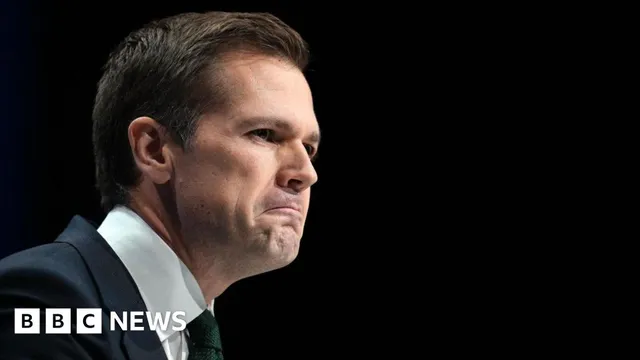
Kemi Badenoch dismisses Robert Jenrick over defection plot
- Kemi Badenoch fired Robert Jenrick after producing evidence of a secret defection plot.
- This decision came amid ongoing speculation regarding Jenrick's ambitions within the Conservative Party.
- The unexpected sacking raises significant questions regarding party unity and future leadership.
Story
In the United Kingdom, the Conservative Party underwent significant turmoil following Kemi Badenoch's decision to fire Robert Jenrick from his position as shadow justice secretary. This dramatic move came several weeks after Jenrick had publicly ruled out a defection to Nigel Farage's Reform UK. Badenoch's decision was based on what she described as 'irrefutable evidence' that Jenrick had been secretly planning to defect, which had not only raised speculation among party members but also undermined her leadership. The situation escalated as reports indicated that Jenrick was involved in discussions with Reform UK and had been preparing a resignation speech. Robert Jenrick's political journey had seen him transition from being a mainstream Conservative, initially elected in 2014, to becoming embroiled in controversies over his loyalty and ambitions. After supporting various leadership candidates, he distanced himself from the party's more centrist policies and gravitated towards a hardline stance. Speculation about his intentions intensified after Badenoch became leader and began to assert her authority, leading to tensions between the two. Badenoch's leadership had already faced scrutiny, and Jenrick's ambitions compounded the challenges she faced in solidifying her position within the party. The sacking was seen by some Conservative MPs as both a necessary step to maintain party unity and a move that could lead to greater instability. Jenrick's departure marked a pivotal moment, as it represented one of the most senior defections to Reform UK thus far, which many within the Conservative Party viewed as a significant threat. Jenrick's firing did not end with his dismissal from the shadow cabinet; the evidence Badenoch claimed to have prompted immediate actions, including the suspension of his party membership. His announcement of defection was framed not only as a personal choice but also as a critique of the Conservative Party's failures. He expressed a desire for the party to acknowledge its past mistakes and to take seriously the challenges facing the nation. This incident not only revealed the ideological rifts within the Conservative Party but also highlighted the competing interests and ambitions that threaten its cohesion.
