

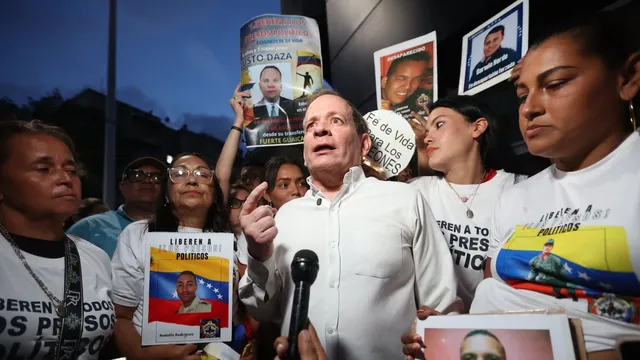
Juan Pablo Guanipa freed after months of unjust imprisonment
Juan Pablo Guanipa freed after months of unjust imprisonment
- Venezuela's government released several political prisoners, including Juan Pablo Guanipa, after lengthy detentions.
- The release occurred after international pressure and coincided with discussions about an amnesty bill.
- Guanipa's family and opposition groups express joy, yet emphasize the challenge of remaining political prisoners.
Story
In Venezuela, the government recently released several prominent opposition members from prison, including Juan Pablo Guanipa, after lengthy politically motivated detentions. Guanipa, a key ally of opposition leader María Corina Machado, had been held for over eight months. His release followed a visit from representatives of the United Nations High Commissioner for Human Rights and was part of a broader initiative by the interim government to release political prisoners after the capture of Nicolas Maduro by U.S. forces. The decision to release these individuals has drawn significant attention from opposition and human rights groups, who have long criticized the government's use of imprisonment to silence dissent. Concurrently, the Venezuelan National Assembly began debating an amnesty bill that could lead to the release of hundreds of prisoners. The momentum for Guanipa's release came after pressure from international actors and increasing calls from human rights advocates. His family expressed joy at his release but also highlighted that many others remain unjustly imprisoned, indicating ongoing concerns about political repression in Venezuela. As the interim government outlined plans for a significant number of releases, the cautious optimism among opposition leaders signals a potential shift in the political landscape following years of authoritarian rule and widespread human rights violations.
Context
The current political situation in Venezuela remains precarious, defined by deep-seated divisions, economic turmoil, and ongoing humanitarian crises. The Bolivarian Republic, governed by the United Socialist Party under the leadership of Nicolás Maduro since 2013, faces intense international scrutiny and internal dissent. Politics in Venezuela have been characterized by accusations of authoritarianism, electoral fraud, and human rights abuses, with the government suppressing opposition voices, restricting media freedoms, and implementing heavy surveillance on dissenting movements. Opposition leaders, including Juan Guaidó, have attempted to lead movements for a transition away from Maduro’s regime, often with varying degrees of support both domestically and from foreign governments, particularly those in Europe and the Americas. However, despite waves of protests and international condemnation, Maduro has managed to retain power, often attributing his survival to support from military elites and foreign allies like Russia and China. The economic landscape in Venezuela is dire, with hyperinflation, stagnating GDP, and escalating poverty rates significantly impacting the population. Once one of the wealthiest countries in Latin America due to its vast oil reserves, the economy has plummeted because of mismanagement, low oil prices, and U.S. sanctions aimed at crippling the regime. The combination of these factors has resulted in a plummet in living standards, leading to mass emigration of Venezuelans seeking better opportunities abroad. The ongoing crises are compounded by shortages of basic necessities such as food, medicine, and essential services, heightening the humanitarian situation that has morphed into one of the worst in the world. Numerous human rights organizations have reported on the devastating health conditions affecting the population, including a resurgence of preventable diseases and malnutrition among vulnerable groups. Amid this backdrop, negotiations have been attempted to facilitate a dialogue between the government and opposition forces, but these efforts have been met with limited success. International initiatives have aimed to provide a platform for political reconciliation, yet each round of dialogue has often faltered due to mistrust and conflicting demands. The establishment of various interim governments supported by external actors has not translated into effective governance or lasting change in the political dynamic. As Venezuela approaches critical electoral periods, expectations for a peaceful transition of power remain low, with both sides entrenched in their positions and unwilling to compromise on core issues. The international community remains divided, with some countries recognizing the Maduro government while others stand firmly behind the opposition. In summary, the political situation in Venezuela is complex and fragile, characterized by an enduring struggle for power and grappling with significant socioeconomic challenges. The entrenched positions of both the government and the opposition limit the prospects for a peaceful resolution to the crisis, while the humanitarian situation continues to deteriorate. With the future of the country at stake, the path forward will require courageous leadership, both domestically and from the international community, to foster a revival of hope and stability in a nation rich in resources but devastated by strife.


