

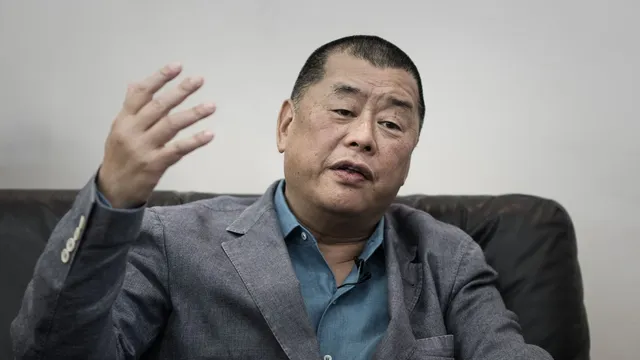
Sebastien Lai appeals for justice for imprisoned father Jimmy Lai
Sebastien Lai appeals for justice for imprisoned father Jimmy Lai
- Sebastien Lai sends a plea to Prime Minister Keir Starmer regarding his father's imprisonment.
- Jimmy Lai, a British national and pro-democracy activist, has been imprisoned since 2019 for his role in protests.
- The plea highlights the need for the UK to prioritize human rights in its dealings with China.
Story
In the context of ongoing human rights concerns in Hong Kong, Sebastien Lai has issued a heartfelt plea to British Prime Minister Keir Starmer during his diplomatic trip to China. Sebastien advocates for the release of his father, Jimmy Lai, a British citizen and prominent pro-democracy activist who has been imprisoned since 2019 for his role in advocating for democracy in Hong Kong. Jimmy Lai has faced significant health challenges during his incarceration, and his family fears for his well-being as he continues to suffer from deteriorating health conditions in prison. The situation intensifies as the UK begins to engage more with China, raising ethical questions about diplomacy and trade in light of human rights abuses. Sebastien emphasizes the moral obligation of the British government to protect its citizens and to advocate for the principles of freedom and justice, suggesting that the release of his father would be a powerful statement against authoritarian repression. This scenario illustrates the broader implications of international relations, where human rights considerations often clash with economic interests. Ultimately, the call for action presents an urgent reminder of the continuing struggle for democracy and human rights in Hong Kong, compelling the UK to confront the realities of its diplomatic relations with China.
Context
The United Kingdom and China have had a complex and multifaceted relationship, particularly when it comes to the issue of human rights. Over recent years, this relationship has witnessed significant tensions and challenges, often exacerbated by differing political ideologies and human rights standards. The UK's stance on human rights has remained a pivotal issue in its diplomatic engagements with China. The British government has consistently highlighted various human rights concerns, including issues related to freedom of expression, assembly, and the treatment of ethnic minorities. Notably, the situations in Hong Kong and Xinjiang have been at the forefront of these discussions, drawing international scrutiny and condemnation from human rights organizations and Western governments alike. In response to these concerns, the UK has utilized diplomatic channels, economic measures, and legal frameworks to address human rights violations in China, aiming to promote accountability and adherence to international human rights norms. Moreover, the UK has faced challenges in striking a balance between advocating for human rights and fostering economic ties with China. The economic integration between the two nations has been significant, with China being a key trade partner for the UK. However, the increasing awareness of human rights abuses has led to a reevaluation of this relationship, with calls from various political factions in the UK for a tougher stance against China. This has included advocating for sanctions against Chinese officials implicated in human rights abuses, particularly in relation to the treatment of Uighurs and the crackdown on dissent in Hong Kong. The UK government has also participated in multilateral initiatives to put pressure on China, aligning itself with like-minded nations to address these issues on a global scale. In recent years, the UK's foreign policy has evolved, reflecting a more assertive approach towards human rights advocacy in relation to China. The imposition of travel bans on Chinese officials and the introduction of new human rights legislation serve as clear indicators of this shift. The UK has also engaged in dialogue with China, seeking to address human rights concerns through discussions while also emphasizing the importance of cooperation in other areas, such as climate change and trade. The delicate balance between confrontation and cooperation remains a cornerstone of UK-China relations, particularly as human rights issues continue to dominate the narrative. Both nations are navigating a landscape marked by geopolitical rivalries, economic considerations, and the enduring importance of human rights advocacy. Looking forward, the future of UK-China diplomatic relations regarding human rights will depend on several factors, including domestic political changes in both countries, the international community's response to China's human rights record, and broader geopolitical dynamics. The UK appears committed to maintaining its stance on human rights as an integral part of its foreign policy, yet it must also consider the implications of its actions on economic relations and geopolitical stability. As the global landscape evolves in response to challenges posed by authoritarianism, environmental crises, and economic disparities, the UK will need to navigate these complexities while upholding its values and promoting human rights both domestically and internationally. The ongoing dialogue and engagement with China will be crucial in addressing these pressing issues, requiring a nuanced understanding of the interplay between human rights advocacy and diplomatic relations.


