

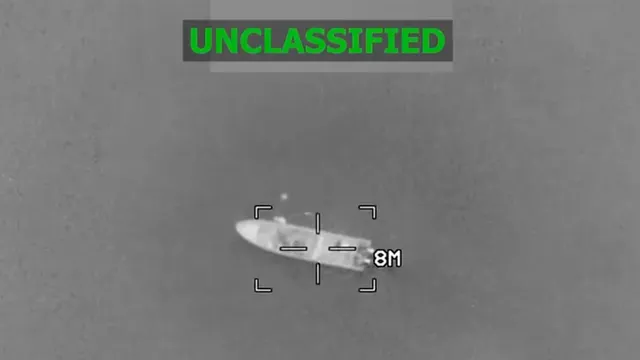
Military strikes kill 11 alleged drug traffickers in the Pacific and Caribbean
Military strikes kill 11 alleged drug traffickers in the Pacific and Caribbean
- On February 16, 2026, U.S. Southern Command launched strikes on three alleged drug smuggling boats.
- Eleven individuals were killed in these operations, referred to as 'male narco-terrorists.'
- The strikes have drawn significant criticism for their legality and potential impact on U.S.-Venezuela relations.
Story
On Monday, February 16, 2026, U.S. Southern Command conducted strikes against three boats suspected of drug smuggling in the eastern Pacific and Caribbean. These operations resulted in the death of 11 individuals, who were labeled as 'male narco-terrorists.' Southern Command stated that intelligence indicated these vessels were operating along known narcotics trafficking routes and were involved in illegal trafficking activities. Despite such claims, the military has not provided concrete evidence of the individuals' involvement in drug trafficking nor confirmed the casualty figures, leading to skepticism and calls for accountability. These military actions have stirred controversy, especially among lawmakers and critics of the Trump administration, who argue that these operations are reckless and lacking legal precedent. The strikes are part of a larger pattern of military engagement in the region aimed at combatting narcotics, which the U.S. administration argues is a critical issue affecting American lives. Critics, however, point to the potential for escalating tensions in an already volatile region, particularly regarding U.S.-Venezuela relations, since Venezuela is viewed as a key drug transit hub. The strikes conducted under the authority of Marine Corps Gen. Francis Donovan come as part of a broader U.S. effort to thwart drug trafficking that has seen over 40 military strikes resulting in more than 130 deaths in recent operations. This narrative is paired with the assertion that such military interventions are essential to protect American citizens from the drug trade's consequences. Moreover, the military’s assertion that the actions are lawful, given the designation of the targeted organizations as terrorist entities, continues to face pushback from both critics and human rights advocates. In January, an extreme measure was taken as the U.S. engaged in a direct attack on the Venezuelan government, leading to the extradition of President Nicolás Maduro and his spouse on narcoterrorism charges. Amid these developments, there is ongoing debate about the implications of U.S. military actions and their alignment with international law, as well as concerns about the risks of civilian casualties in the pursuit of combatting drug trafficking. While defense officials remain firm on the necessity and legality of these operations, the need for transparency and verification of military claims has become increasingly critical as public and political scrutiny intensifies.


