

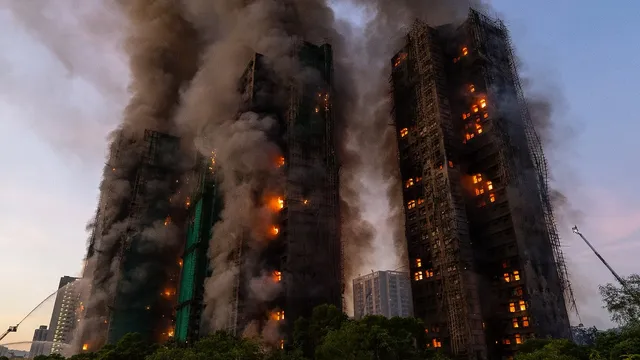
Hong Kong to implement smoking ban at construction sites after tragic fire
Hong Kong to implement smoking ban at construction sites after tragic fire
- A devastating fire in Tai Po, Hong Kong, claimed 168 lives in November 2025, likely started by a worker smoking on-site.
- In response, authorities proposed a smoking ban at all construction sites, including hefty fines and potential jail sentences for violations.
- The initiative aims to improve safety standards and reduce health risks from second-hand smoke for construction workers.
Story
In November 2025, a catastrophic fire broke out in Tai Po, Hong Kong, resulting in the deaths of 168 people. The inferno, which spread through apartment blocks at Wang Fuk Court, was linked to inadequate fire safety standards and failures from both contractors and the government. An investigation revealed that the fire was likely initiated when a worker lit a cigarette. In response to this tragedy, the Labour and Welfare Bureau, in collaboration with the Labour Department, proposed a comprehensive smoking ban at all construction sites. This initiative aims to enhance safety by mitigating fire risks associated with smoking and protecting workers from exposure to second-hand smoke. The proposed ban outlines significant penalties for violations, including fines of HK$3,000 for individuals caught smoking or carrying lit tobacco products at construction sites. For contractors, serious violations could lead to fines up to HK$3 million and imprisonment for six months. The legislative process is being expedited, with discussions expected in the Legislative Council by mid-2026. While the proposal aims to address public health concerns and improve workplace safety, certain exemptions have been made. Specifically, areas occupied by residents will not fall under the new regulations, allowing smoking in occupied domestic premises. Public hearings have commenced to scrutinize the incident’s cause, focusing on failures that led to the deadliest fire in decades. Surveillance footage indicated confusion among workers as they pointed fingers at one another as the fire started. The need for enhanced safety measures prompted the call for this ban, reflecting a shift in policy aimed at reducing fire hazards and safeguarding health. In Scotland, a smoking ban was enacted in 2006, which has had a notable impact on public health, reducing exposure to second-hand smoke significantly. Over the years, the country has implemented other measures to combat smoking, aligning with a broader public health goal of achieving a 'tobacco-free' Scotland by 2034. The recent proposed ban by Hong Kong authorities mirrors such efforts, showcasing a proactive approach to prevent further tragedies rooted in smoking-related risks.


