

Russian drone strike kills miners amid peace talks delay
Russian drone strike kills miners amid peace talks delay
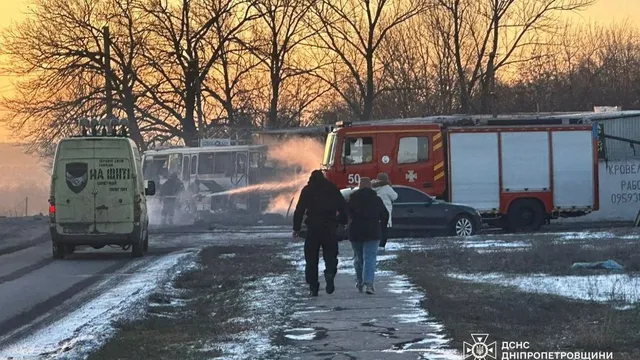
- A Russian drone strike targeted a bus carrying miners in Ukraine's Dnipropetrovsk region, resulting in the deaths of at least 12 individuals.
- Several people were injured in a separate strike on a maternity hospital in Zaporizhzhia, highlighting the war's toll on civilians.
- These attacks underscore the ongoing violence in the region and raise concerns about the upcoming peace talks between Ukraine and Russia.
Story
In Ukraine, a recent drone strike by Russian forces targeted a bus carrying miners in the Dnipropetrovsk region, resulting in the deaths of at least 12 miners and injuring several others. This attack occurred as tensions between Ukraine and Russia were escalating, with peace talks initially scheduled for February 1 being postponed. The energy firm DTEK, which owned the attacked bus, confirmed that the strike could be classified as a terrorist act against civilians, emphasizing the targeted nature of the assault. Ukrainian officials condemned the attack, highlighting it as further evidence of Russia’s disregard for civilian lives in the conflict. On the same day, a separate drone incident resulted in injuries to individuals at a maternity hospital in Zaporizhzhia, demonstrating that civilian infrastructure remains a significant target amidst the ongoing war. Regional governor Ivan Fedorov described the situation as “proof of a war directed against life,” revealing how deep-rooted the conflict has become in impacting innocent lives. This dual occurrence highlights the humanitarian crisis facing Ukraine due to relentless military actions from Russia, emphasizing the urgent need for effective negotiation and resolution. Despite the announced negotiations between Ukraine and Russia in Abu Dhabi set for February 4-5, the strikes suggest that military actions have not dwindled and are being utilized strategically to exert pressure in an already fraught situation. Furthermore, U.S. presidential comments regarding a halt to attacks due to the severe winter conditions contrast sharply with the reality on the ground, where violence continues to escalate. With international stakeholders involved in the peace process, the urgency for a resolution becomes more critical as the impact of strikes on civilians in both urban and rural areas raises questions about the integrity of future discussions. Ukrainian President Volodymyr Zelenskyy has publicly condemned these acts, pressing for accountability and an end to what he describes as aggression against his nation. As long as such attacks proceed, the feasibility of the impending talks and achieving a lasting peace remains in jeopardy.
Context
The ongoing conflict in Ukraine has had devastating effects on civilian populations, with military attacks causing significant loss of life, injury, and displacement. Reports indicate that attacks on civilian infrastructure, including residential areas, schools, and hospitals, have led to substantial casualties among non-combatants. The indiscriminate nature of some military operations raises urgent concerns regarding compliance with international humanitarian law, as the principles of distinction and proportionality may not always be upheld. As military actions continue to escalate, the number of civilians living in fear and facing constant threat has dramatically increased, complicating the humanitarian response and exacerbating vulnerabilities. Civilian casualties due to military attacks not only result in immediate loss of life and suffering but also have long-term implications for the affected communities. Survivors are left to deal with psychological trauma, social instability, and economic hardship. The destruction of homes and infrastructure disrupts access to essential services, including healthcare and education, and contributes to insecurity. Many families have been forcibly displaced from their homes, leading to a refugee crisis that impacts neighboring countries as well as the broader region. This displacement adds pressure to already strained humanitarian resources and raises challenges around protection and assistance for vulnerable populations. The international response to the impact of military attacks on civilians in Ukraine has involved condemnation of violence, calls for accountability, and efforts to provide humanitarian aid. Non-governmental organizations and international bodies are working tirelessly to deliver critical support, including food, shelter, and medical care. However, the scale of the crisis often overwhelms existing capacities, making it crucial for the global community to enhance coordination and resource mobilization. Additionally, legal mechanisms must be utilized to hold perpetrators accountable for violations of international law, providing justice for the affected civilians and potentially deterring future attacks. In summary, the military attacks in Ukraine have had dire consequences for civilian populations, causing loss of life and forcing millions into precarious situations. As the conflict continues, sustained attention to the humanitarian needs of affected individuals is essential, alongside a commitment to uphold international legal standards and promote accountability. The situation in Ukraine serves as a stark reminder of the human cost of conflict, highlighting the need for urgent action to protect and support civilians caught in the crossfire.


