

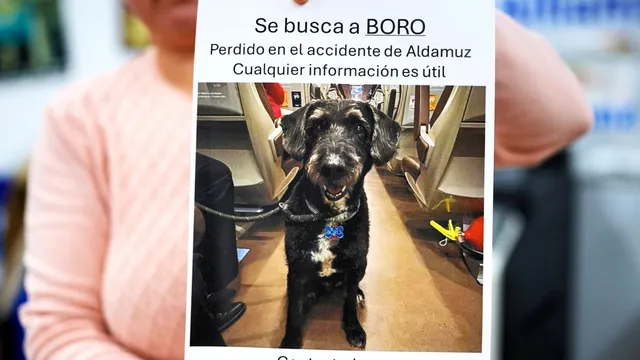
Hope restored as missing dog Boro is found after train crash in Spain
Hope restored as missing dog Boro is found after train crash in Spain
- Ana García and her sister were involved in a train crash that killed at least 45 people.
- Boro, their dog, went missing immediately after the incident, leading to a widespread search effort.
- The successful recovery of Boro brought hope to the community amidst the tragedy.
Story
On January 18, 2026, a tragic derailment of a high-speed train occurred in southern Spain, resulting in at least 45 fatalities and over 150 injuries. The incident took place while Ana García, 26, and her pregnant sister were traveling with their dog, Boro, from Malaga to Madrid. After the crash, Boro bolted from the scene, prompting Ana to issue a heartfelt plea for help in finding him, which resonated widely across social media platforms. The search for Boro captured the hearts of many in Spain, leading to a widespread online campaign to locate the lost pet, as people shared his images and details about him. Despite the somber circumstances surrounding the train derailment, the hunt for Boro offered a glimmer of hope to the tragedy-stricken nation. Ultimately, forest firefighters came across Boro days after the crash, reuniting him with Ana. The uplifting conclusion to this story provided a much-needed positive moment amidst the devastation caused by the train accident, and the community's efforts highlighted the bond people share with their pets during such harrowing times. Reports noted that the incident resulted from a rail fracture, with investigations ongoing to determine the exact cause of the derailment, which has deeply affected the region, prompting discussions about railway safety standards.
Context
The train accident in Spain has significantly heightened awareness regarding railway safety standards and protocols. This incident has raised pertinent questions about the effectiveness of existing safety measures in place and whether they adequately protect passengers and rail operators. A thorough analysis of the circumstances surrounding the accident, including the technical failures and human errors involved, has shed light on pivotal areas needing immediate attention and reform. Public response and media coverage of the event have driven the call for enhanced safety regulations, which underscores the consequence of not addressing potential vulnerabilities within the railway system. In the aftermath of the incident, various investigations have been launched to scrutinize the conditions that led to the train accident. These inquiries have highlighted not only the need for improved infrastructure but also the necessity of rigorous training for railway employees. The investigation findings suggest that safety protocols were either not followed or were insufficiently stringent. This revelation has prompted railway authorities to reevaluate their operational practices and consider implementing more comprehensive training programs that prioritize safety and risk management. Moreover, the accident has spurred discussions surrounding technology's role in enhancing railway safety. Innovations such as automated braking systems, real-time monitoring of train conditions, and advanced signaling technology have come to the forefront as essential tools for minimizing risks. The integration of these technologies is essential for modernizing the railway infrastructure and ensuring that accidents of this nature do not recur. Public demand for accountability and safety has put pressure on rail operators and governmental bodies to invest in technologies that guarantee a safer travel experience. In conclusion, the impact of the train accident on Spanish railway safety has been profound, emphasizing the urgent need for comprehensive reforms across various dimensions. As investigations unfold and recommendations are made, there is a significant opportunity for stakeholders to collaborate and implement changes that will enhance the safety of the rail system. Threading together lessons learned from this unfortunate event, the focus must remain on engaging with the community, employing technological advancements, and fostering a culture of safety that actively prioritizes the well-being of passengers and personnel alike.


