

UK blocks Chinese investment in wind turbine factory over security risks
UK blocks Chinese investment in wind turbine factory over security risks
- The UK government rejected a £1.5 billion investment proposal for a wind turbine plant by the Chinese company Ming Yang, citing security concerns.
- This decision comes amid broader anxieties regarding Chinese investments in critical infrastructure and potential espionage.
- By blocking this plan, the UK aims to prioritize national security while also seeking to foster a safe environment for domestic job growth.
Story
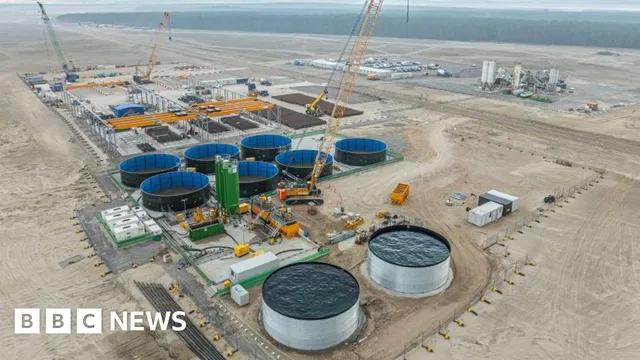
In recent months, the UK government rejected a significant investment proposal by the Chinese company Ming Yang aimed at establishing a wind turbine manufacturing plant in Ardersier, a former oil and gas port. The proposed investment was worth £1.5 billion and promised to create about 1,500 jobs in the clean energy sector, which could have revitalized the long-vacant 450-acre site. Although the plans seemed promising for the local economy, the government stated they needed to ensure the safety and security of such investments, especially considering heightened concerns regarding Chinese participation in critical infrastructures. The decision reflected broader apprehensions over foreign investments from nations perceived as security risks. Unconfirmed reports suggested that US officials had reportedly warned the UK government about the implications of approving the project, echoing an ongoing trend since the previous administrations. The scrutiny over Chinese investments in the UK grew following incidents involving potential espionage and political interference linked to Chinese entities. Notably, over the last several years, the UK's intelligence services had raised alarms about various threats posed by Chinese agents, including their efforts to influence political processes in the UK. While the rejection of the Ming Yang project indicates a shift toward greater caution regarding foreign investments, it coincidentally emerged on the same day when Vestas, a Danish company, announced plans to invest in a competing wind turbine factory in Scotland, which could generate 500 new jobs. This situation highlights the balance the UK government must strike between fostering new jobs in renewable energy and ensuring national security in an era marked by increased geopolitical tensions. Additionally, this decision may signify a broader strategic pivot away from the so-called "golden era" of UK-China relations, as characterized during Cameron's tenure. Current sentiments reflect that China is seen as an epoch-defining challenge, prompting a thorough reassessment of bilateral relations and investment partnerships. The stalled Ming Yang project illustrates a growing desire within the UK to act more cautiously and potentially prioritize domestic industry growth without compromising national security, which has now become a pressing concern amid a backdrop of global technological competition.
Context
The history of UK-China relations has been shaped by complex interactions, ranging from trade and diplomacy to conflict and cooperation. The formal connections began during the 16th century when the British East India Company sought to establish trade relations with China. The trade was initially limited but expanded significantly with the export of opium from British India to China in the 18th and 19th centuries. This trade imbalance caused social and economic issues in China, leading to the Opium Wars. The First Opium War (1839-1842) resulted in the Treaty of Nanking, which ceded Hong Kong to Britain and opened several ports to British trade. This marked the beginning of a period of significant Western influence in China, known as the 'Century of Humiliation.' The interactions were often characterized by the British pursuit of economic interests at the expense of Chinese sovereignty, contributing to a legacy of mistrust that would persist for decades. Following the end of the Qing Dynasty and the establishment of the Republic of China in 1912, the relationship underwent further transformation. The UK initially recognized the new government, but as China struggled with internal strife and the rise of communism, British influence waned. The Second World War saw both nations fighting against a common enemy, yet the post-war period shifted the dynamics once more, particularly following the establishment of the People's Republic of China (PRC) in 1949 under communist rule. The UK was one of the last Western powers to recognize the PRC, only doing so in 1950. For much of the Cold War, diplomatic relations remained strained, largely due to the UK's alignment with the United States and China's alignment with the Soviet bloc. The relationship began to thaw in the 1970s, particularly after the UK and China signed the Sino-British Joint Declaration in 1984, which outlined the future of Hong Kong post-1997, emphasizing a 'one country, two systems' approach. This period represented a significant effort at normalization and engagement, focusing on mutual economic interests. UK-China trade relations expanded dramatically after Hong Kong's return to China in 1997, with both countries experiencing increased economic interdependence. This growth was underpinned by significant Chinese investments in the UK and British interests in Chinese markets, particularly in sectors such as finance, education, and technology. However, the relationship has faced challenges in recent years, particularly surrounding human rights issues, the South China Sea disputes, and political events in Hong Kong. The UK has expressed concerns over China's handling of pro-democracy protests in Hong Kong, leading to tensions between the two nations. Additionally, the rise of China's global influence and assertiveness has prompted the UK to reassess its foreign policy strategy towards Beijing. As of 2026, UK-China relations remain a critical area of focus, balancing cooperation in trade and climate initiatives with ongoing diplomatic challenges. The future trajectory of these relations will likely hinge on mutual respect, dialogue, and addressing the underlying issues affecting bilateral ties.


