

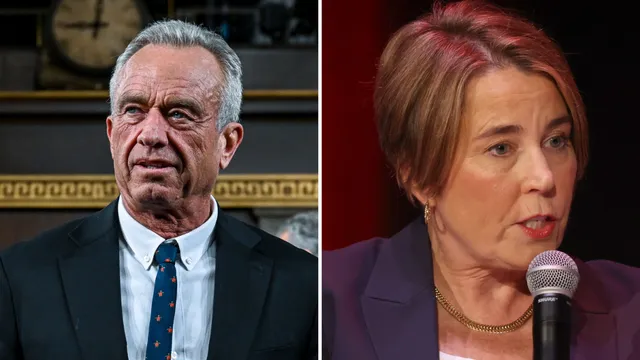
Robert F. Kennedy Jr. faces backlash for questioning sugary drink safety
Robert F. Kennedy Jr. faces backlash for questioning sugary drink safety
- Robert F. Kennedy Jr. questioned the safety of high-sugar iced coffee drinks from Dunkin' and Starbucks, prompting significant backlash.
- Massachusetts Governor Maura Healey defended the drinks, highlighting their cultural importance.
- The controversy has sparked a wider discussion on food safety regulations in the U.S.
Story
In the United States, Robert F. Kennedy Jr., the Health Secretary, has stirred controversy after expressing concerns about the safety of high-sugar iced coffee drinks sold by Dunkin' and Starbucks. This statement was made at an 'Eat Real Food' rally on February 26, 2026, in Austin, Texas, where he urged the coffee giants to provide safety data regarding the high sugar content in their beverages, specifically mentioning iced coffees containing up to 115 grams of sugar. His remarks have elicited strong reactions, particularly from officials and residents in Massachusetts, where Dunkin' originated and holds significant cultural resonance. Governor Maura Healey of Massachusetts responded to Kennedy's claims through social media, defending the local favorite beverage and highlighting its importance to the state's identity. The issue sparked a lively debate online, as some users aligned themselves with the governor's stance while others expressed support for Kennedy's concerns about food safety standards. The confrontation over sugary drinks coincides with Kennedy's wider initiative to enhance food safety regulations in the U.S. as he has been scrutinizing the decades-old 'Generally Recognized As Safe' (GRAS) system used by food companies. Kennedy's push for reforms aims to require companies to provide safety data for ingredients they utilize—a move perceived by some critics as a necessary step toward improving public health. However, his critics argue that this initiative may further aggravate existing tensions regarding food choices in American culture, particularly in regions where coffee consumption is an integral part of daily life. Given his background as an anti-vaccine activist, many health professionals and scientists remain skeptical of his motivations and approach, fearing that his policies might lead to broader public health implications. Moreover, the editorial board of the esteemed medical journal The Lancet took a disparaging stance on Kennedy’s tenure as Health Secretary, emphasizing the potential long-term damage it could inflict on American health policies. This critical perspective highlights the alarm many in the medical community feel regarding the direction of health leadership in the U.S. under Kennedy’s influence, with calls for accountability and reforming the overall approach to health governance.


