

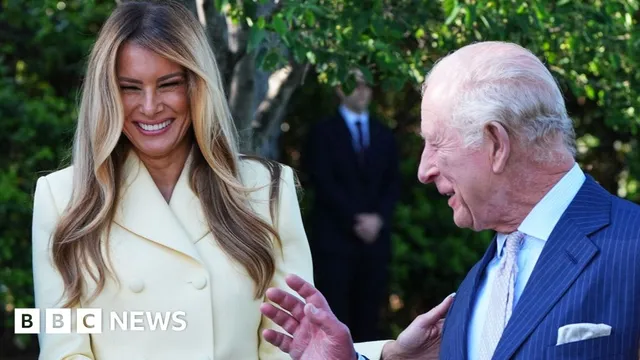
King Charles and Queen Camilla begin historic state visit to the U.S
King Charles and Queen Camilla begin historic state visit to the U.S
- King Charles III and Queen Camilla commence a historic state visit to the United States, the first by a British monarch since 2007.
- Their itinerary includes key events in Washington D.C. and New York, aiming to strengthen the historic ties between the two countries.
- The visit seeks to improve U.S.-U.K. relations, which have faced challenges, with higher favorability ratings for King Charles compared to President Trump.
Story
King Charles III and Queen Camilla have commenced a state visit to the United States, marking the first official visit by a British monarch since Queen Elizabeth II's visit in 2007. The royal couple's trip, spanning four days, encompasses key locations including Washington D.C., New York, and Virginia. Their arrival is significant as it coincides with the United States' 250th anniversary celebrations since gaining independence from British rule. This visit aims to strengthen the relations between the United Kingdom and the United States, showcasing their historical ties and collaborative efforts on various fronts. In Washington, the royal pair will participate in a garden party at the British ambassador's residence, an event steeped in royal tradition, which has not been held in the U.S. for decades. The visit includes a formal welcome at the White House, where President Donald Trump and First Lady Melania Trump will exchange gifts with the King and Queen. Following the ceremonial military review, a 21-gun salute will honor the visiting dignitaries. The day will culminate with an official state dinner at the White House, highlighting the special relationship between the two nations. In recent polling, King Charles is perceived more favorably by the American public compared to President Trump, with 43 percent of Americans holding a positive view of the King, while only 18 percent view Trump favorably. This difference in public opinion indicates a challenging backdrop for discussions around U.S.-U.K. relations. The meeting carries implications as it seeks to address the tensions that have built between the two countries, particularly regarding NATO and tariff issues during Trump's presidency. Observers hope that this royal visit could foster a strengthened alliance in light of current international concerns. As the couple concludes their engagements in Washington, they will move on to New York City, where events are also planned. However, it has been confirmed that the King and Queen will not meet the Duke of Sussex, Prince Harry, and his wife, Meghan Markle, during their visit. Following their U.S. engagements, King Charles III will continue to Bermuda for a subsequent visit, further emphasizing his role as head of state in multiple territories.
Context
Royal visits to the United States have historically played a significant role in shaping the diplomatic, cultural, and social relationships between the U.S. and various monarchies. These visits often symbolize goodwill and mutual respect, embodying the longstanding ties between the U.S. and several countries with royal families. For instance, the visits of British royals, particularly those of Queen Elizabeth II and Prince Charles, have been pivotal in reinforcing the special relationship between the U.S. and the United Kingdom, emphasizing shared values and history. Such trips typically attract considerable media attention and public interest, helping to enhance the profile of both the visiting royals and the host nation. Additionally, they can stimulate tourism and economic activities, as citizens are drawn to events and festivities surrounding the royal presence. The significance of these royal visits extends beyond mere ceremonial functions; they often address contemporary issues and foster dialogue on global challenges. For instance, during state visits, royals frequently engage in discussions that highlight pressing matters such as climate change, human rights, and international security. Their status lends these dialogues a unique level of visibility and importance, generating public discourse and possibly influencing policy discussions. The royals often participate in public engagements, which also serve to humanize them and create connections with everyday citizens, offering a glimpse into the softer side of monarchy. Moreover, royal visits can catalyze cultural exchanges and mutual understanding. Events like official banquets, cultural exhibitions, and state dinners enable the showcasing of each nation’s heritage, traditions, and arts, enriching the sociocultural tapestry shared between nations. These exchanges help strengthen relationships and promote a sense of community among countries, especially when royals embrace local customs and engage with diverse communities. Historical anecdotes reveal how these visits can inspire cross-cultural collaborations and initiatives that benefit both the visiting royalty and the host nation, showcasing the power of diplomacy. In conclusion, the historical significance of royal visits to the United States is multifaceted, encompassing diplomatic reinforcement, cultural enrichment, and social engagement. These visits embody the ethos of friendship and collaboration, often resulting in lasting impacts that resonate beyond the temporal nature of the visits themselves. As global dynamics evolve, the role of royal visits may continue to adapt, yet their ability to connect nations and symbolize shared values remains a powerful aspect of international relations.


