

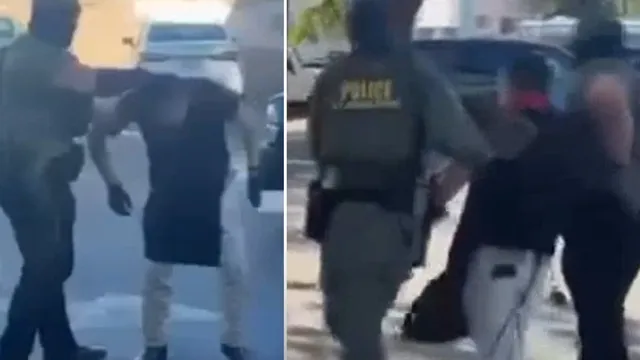
Los Angeles protests against ICE escalate with multiple arrests
Los Angeles protests against ICE escalate with multiple arrests
- Nationwide protests against ICE began on January 30, 2026, fueled by outrage over the deaths of two citizens.
- In Los Angeles, protests escalated with confrontations between demonstrators and police, resulting in the deployment of crowd control measures.
- The protests reflect growing discontent towards federal immigration policies, making clear the demand for accountability and justice.
Story
In the United States, coordinated nationwide protests took place on Friday, January 30, 2026, against the Immigration and Customs Enforcement (ICE) agency. Protests erupted specifically in cities like Los Angeles and Minneapolis, fueled by outrage over the fatal shootings of two U.S. citizens, Renee Good and Alex Pretti, by federal agents during enforcement operations. Rallies attracted massive crowds who filled downtown streets, with many participants carrying signs and chanting against federal immigration raids. The protests began peacefully, with demonstrators gathering at City Hall, but escalated significantly when violent elements emerged, leading to chaotic scenes and confrontations with law enforcement. In Los Angeles, as tensions reached a boiling point, LAPD deployed crowd control measures, including tear gas and pepper balls, and issued dispersal orders as protesters attempted to breach police lines. Reports documented projectiles being thrown at officers as unrest surged throughout the day and into the evening. Many businesses joined the movement by closing their doors, while students and workers across the country walked out of classrooms and jobs in solidarity. The protests were a continuation of the growing discontent directed at ICE and the federal government's immigration policies. Organizers emphasized that the protests were aimed at addressing the “ICE terror” that they claimed oppressed communities. Authorities declared unlawful assemblies as violent agitators obstructed entrances to significant federal buildings. The LAPD indicated that multiple arrests were made, although the exact number was not immediately confirmed. The unrest was noted as part of a larger interconnected series of actions occurring in numerous cities across America, including New York, Chicago, and San Diego, making clear that the message against ICE enforcement was gaining significant traction. In addition to the confrontations in Los Angeles, Minneapolis saw overwhelming crowds protesting outside the Bishop Henry Whipple Federal Building. Activists in the city returned to the streets despite frigid winter temperatures, chanting for accountability following the deaths of Good and Pretti. The protests are expected to continue over the weekend with further demonstrations planned, as organizers rally for justice and demand accountability for the recent violence perpetrated by federal agents. The situation has heightened tensions between the local populace and law enforcement, generating significant media attention as further calls for justice resonate through American society as views on immigration and federal law enforcement are increasingly scrutinized. Democrats in Washington, D.C., have even threatened to launch impeachment proceedings against Homeland Security Secretary Kristi Noem, which also contributed to the charged atmosphere surrounding the protests. These civil demonstrations reflect a deepening divide in American society regarding immigration policy and enforcement actions. Ongoing public dissent targeting ICE showcases a demand for change and a united front against what many activists see as an oppressive regime that jeopardizes the lives and rights of countless individuals, particularly in immigrant communities. The stage is set for future engagement, whether through additional organized actions, legislative efforts, or potential political repercussions for federal officials overseeing ICE operations.


