

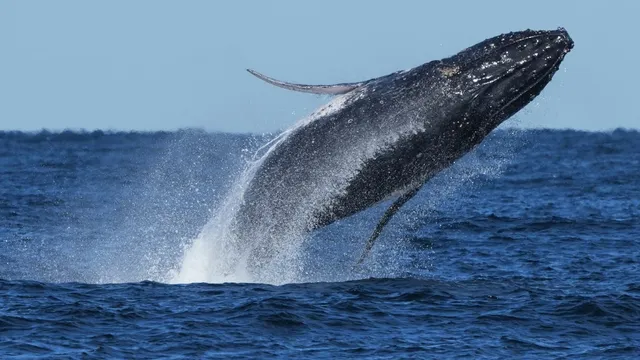
Humpback whale struggles for survival after beaching in Oregon
Humpback whale struggles for survival after beaching in Oregon
- A juvenile humpback whale has become beached on a San Marine beach in Oregon after getting caught in crab fishing gear.
- Marine experts believe the whale's chances of survival are very low, with some stating its prospects as 'slim to none.'
- Rescue efforts are ongoing, but there remains a significant concern about the whale's condition and potential for recovery.
Story
In the United States, a juvenile humpback whale has become stranded on a beach in San Marine, Oregon, after getting entangled in crab fishing gear. The massive female whale, estimated to be around 30 feet long and weighing 50 tons, was still alive but in severe distress when volunteers arrived at the scene. Marine biologist Carrie Newell urged the public to keep their distance to minimize stress on the whale, which faces significant challenges due to its beached condition. Whales in this state suffer from the compression of their internal organs, which can be life-threatening. Experts involved in the rescue efforts expressed concerns about the chances of the whale's survival. Lisa Ballance from the Marine Mammal Institute at Oregon State University emphasized that the whale’s prospects are “slim to none,” indicating that there is little hope for recovery once a whale is beached. The whale's beaching is believed to be a result of an inability to survive in the ocean, raising alarm for its future. Although some rescue efforts were underway, the situation remains precarious. There have been instances in the past where whales have attempted to free themselves from beached conditions during high tides, which offers a glimmer of hope. Newell noted that if the whale possesses enough energy to return to the water at high tide, survival could still be a possibility. However, as it currently stands, various marine scientists have suggested that any intervention attempts might be insufficient in turning the situation around. In addition to the immediate rescue efforts, officials have mentioned that should the whale die, a necropsy will be performed. This post-mortem examination aims to determine the cause of death and is valuable for scientific understanding. It’s worth noting that this is the third humpback whale reported to wash ashore within a short time frame, raising questions about broader ecological impacts. In terms of population, humpback whales have shown recovery in numbers, with estimates placing their population at around 80,000, yet concerns about endangered subspecies persist. The incident highlights the vulnerabilities faced by these majestic creatures and serves as a reminder of the delicate balance between marine life and human activities.
Context
Marine mammals play a crucial role in the health of marine ecosystems and are often seen as indicators of ocean health. However, many populations are experiencing significant challenges due to human activities, environmental changes, and increasing threats from climate change. Rescue efforts for marine mammals have become an essential component of wildlife conservation strategies. These initiatives aim not only to rehabilitate individual animals but also to address the broader conservation needs of marine species and their habitats. The multifaceted approach to marine mammal rescue includes rehabilitation, public education, research, and legislative advocacy, all pivotal for promoting the long-term survival of these species. Rescue efforts typically begin when an injured or stranded marine mammal is reported. Trained professionals and volunteers work together to assess the situation and determine the best course of action for the animal. This could involve providing immediate medical attention, transporting the animal to a rehabilitation facility, or, in some cases, euthanizing the animal if it's deemed too injured to survive. Rehabilitation facilities are equipped to deal with a variety of marine mammals, offering medical care, nutrition, and a safe environment for recovery before the aim of returning them to their natural habitat. Successful rehab is only one part of the cycle; ongoing monitoring once the animal is released is critical to ensure they can adapt and thrive in the wild. Education and outreach are vital components of marine mammal rescue efforts. Public awareness campaigns help to inform the community about responsible behaviors to minimize human impact on marine mammals, such as preventing habitat pollution, respecting wildlife during boating activities, and reporting stranded animals promptly. Furthermore, educating the public on the threats facing marine life fosters a sense of stewardship and responsibility towards marine ecosystems, generating support for conservation policies. Community involvement in rescue efforts also enhances the collective knowledge and capacity to respond to marine mammal strandings and emergencies. Ultimately, successful marine mammal rescue efforts rely on collaboration among governmental agencies, non-governmental organizations, researchers, and local communities. Real-time data collection and research are essential to understanding population dynamics and the health of marine ecosystems, which inform management decisions and policies. Legislative efforts aimed at protecting marine mammals and their habitats under frameworks like the Marine Mammal Protection Act are critical to mitigating threats and ensuring a future where marine mammals can thrive. In conclusion, marine mammal rescue efforts represent a vital interface between human activity and wildlife conservation, emphasizing the importance of proactive measures to safeguard marine biodiversity.


