
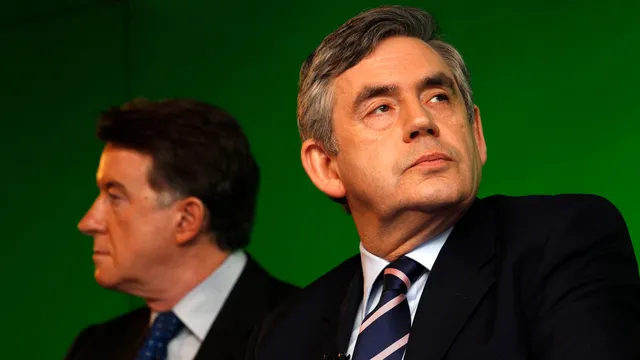
Gordon Brown condemns Peter Mandelson for leaking sensitive government information
- Peter Mandelson is accused of leaking sensitive government information during the 2008 financial crisis.
- Gordon Brown has publicly expressed feelings of being betrayed by Mandelson's actions.
- This scandal raises significant questions about ethics in public office and the need for reform.
Story
In recent revelations, Peter Mandelson, the former business secretary of the United Kingdom, faces serious allegations of leaking sensitive information to Jeffrey Epstein, a convicted sex offender. Reports indicate that this leak occurred during the aftermath of the 2008 global financial crisis. The information reportedly shared by Mandelson is said to have been commercially sensitive, risking financial stability for the UK. Gordon Brown, former prime minister and Mandelson's colleague, expressed deep frustration at this betrayal, emphasizing the potential damage done to the country's economic interests and the imperative need for accountability in public service. The controversy surrounding Mandelson intensified when it was unveiled that he maintained a relationship with Epstein even after the latter's conviction for sex-related offenses in 2008. This connection raises significant ethical concerns about Mandelson's judgment and decision-making in relation to his public duties. Brown articulated a sense of betrayal not only for himself but also for other political figures affected by Mandelson's actions. As the investigation unfolds, the legitimacy of Mandelson’s relationships and actions during his tenure in government is under scrutiny. Additionally, new documents surfaced suggesting that Mandelson received financial support from Epstein, adding another layer of complexity to this scandal. Brown's statements highlight a broader need for political leaders to be transparent and diligent in their associations, stressing that such behavior is incompatible with public service. The complexity of the interaction between public officials and private interests has now come to the forefront of political discourse in the UK. The current government has acknowledged the seriousness of the situation, suggesting that the existing Ministerial Code should be strengthened. There are calls for system reforms to ensure that government officials are held accountable for their actions, especially when they jeopardize national interests. The discourse suggests a pivotal moment in political ethics in the UK, as figures from different parties express their concerns over the implications of this scandal for governance and public trust.
Context
The UK political scandal involving Peter Mandelson revolves around his controversial political career, characterized by both significant accomplishments and notable controversies. Peter Mandelson, an important figure in the Labour Party, served various roles including Minister for Trade and Industry and First Secretary of State. His influence during the New Labour era, which saw the party under Tony Blair's leadership, positioned him as a key architect of modernizing the Labour Party. However, his career was often mired in scandal, including allegations of lobbying and connections with wealthy business figures, which led to public scrutiny and criticism of his integrity and political judgment. One of the most significant incidents that marked Mandelson's political trajectory occurred in the late 1990s, when he was forced to resign from the Cabinet twice due to controversies. The first resignation was related to a loan he received from a business tycoon, which raised questions about the propriety of politicians accepting financial support from private individuals with potential interests in government policy. The second resignation was tied to a controversial planning decision that favored a business associate, leading to accusations of favoritism and cronyism. These incidents not only damaged his reputation but also highlighted the risks associated with the intertwining of politics and finance in the UK. Despite these controversies, Mandelson maintained a significant influence within the party and the government. His ability to navigate complex political landscapes allowed him to play a critical role in promoting policies that revitalized the party's image. His work on issues such as trade negotiations and economic reform helped the government position itself as a pro-business party, appealing to both traditional Labour supporters and centrist voters. The duality of his role as both a reformer and a scapegoat for political missteps illustrates the complexities of his influence. Mandelson's legacy is a subject of ongoing debate among political analysts and historians. While some view him as a skilled operator who helped shape a modern Labour Party capable of winning elections, others see him as a symbol of the pitfalls of political expediency and the ethical challenges faced by public figures. The scrutiny he faced, coupled with his ability to partially rebound from scandal, raises important questions about accountability in politics and the impact of public perception on political careers.
