

Army officers seize control of Guinea-Bissau amid president's arrest
Army officers seize control of Guinea-Bissau amid president's arrest
- Following a contentious presidential election, military officers claimed seizure of power in Guinea-Bissau.
- Witnesses reported gunfire near the presidential palace, leading to confusion and chaos.
- The military announced a curfew and intended to govern until further notice amidst accusations of orchestrated political unrest.
Story
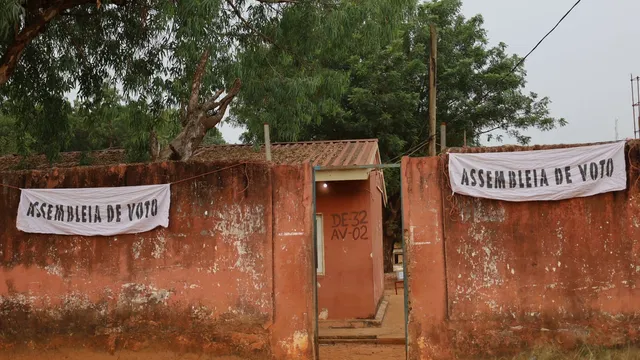
Guinea-Bissau, one of the poorest nations in the world, was thrown into chaos after military officers declared they had taken control of the country. This came soon after reported gunfire near key government buildings, specifically the presidential palace and the electoral commission headquarters. The upheaval occurred on Wednesday, following a week marked by a hotly contested presidential election in which both incumbent President Umaro Sissoco Embaló and his main opponent, Fernando Dias, claimed victory. As tensions escalated, Embaló reported that he had been deposed during the coup, which critics allege was orchestrated by the army chief of staff. Witnesses described hearing gunfire in the capital city, Bissau, around midday, prompting panic among residents. Hundreds sought refuge as military officers appeared on state television declaring a suspension of the electoral process. They announced the formation of 'The High Military Command for the Restoration of Order' and implemented curfews and border closures, stating they would govern until further notice. These developments have reignited fears in a nation already familiar with political instability, having experienced multiple coups since gaining independence in 1974. The coup attempt has drawn significant media attention, particularly given the backdrop of disputed election results from the preceding Sunday. The electoral commission was set to announce provisional results at the time of the uprising, which had already been marred by controversy due to the disqualification of key opposition candidates. This political climate is reflective of a broader trend in Guinea-Bissau, where leaders have historically faced prolonged crises and accusations of fabricating threats to consolidate their power. Frequent coups and attempted coups have destabilized Guinea-Bissau's political landscape for decades. The current episode marks yet another chapter in the country's tumultuous history, as many citizens are left to grapple with their uncertain future. Amidst the turmoil, prominent politicians and officials have also been arrested, leading to calls for accountability and restoration of the democratic process. The international community is likely to watch closely as the situation develops, given the implications for regional stability and the ongoing challenges of governance in Guinea-Bissau.
Context
Guinea-Bissau has a complex political history characterized by a series of coups and political instability since gaining independence from Portugal in 1974. The country faced immediate challenges in establishing itself as a sovereign state, with the need to build governance structures amidst the remnants of colonial rule. The first president, Luis Cabral, struggled to unify the various factions within the country, leading to his ousting in a coup in 1980. This event marked the beginning of a pattern of military intervention in politics, as the military has often positioned itself as a decisive actor in determining the country’s leadership and direction. Following a decade of dictatorship under Joao Vieira, who came to power through a coup, a multiparty system was adopted in 1991, bringing hope for democratic governance but also setting the stage for continued political turmoil. Throughout the 1990s and early 2000s, Guinea-Bissau experienced several coups and attempted coups, each underscoring the fragility of its political institutions. The assassination of President Vieira in a coup in 2009 highlighted the extent to which personal rivalries influenced the political landscape. This period was marked by the difficulty of establishing a stable government, with frequent changes in leadership and ongoing struggles between civilian authorities and military factions. Political parties often found themselves in conflict, further complicating the governance process. This instability has been compounded by economic challenges, with the country relying heavily on agriculture and suffering from a lack of infrastructure and development. The landscape of Guinea-Bissau's political history is further complicated by the influence of drug trafficking, which has plagued the country since the early 2000s. The strategic position of Guinea-Bissau, with its many islands and long coastline, has made it a transit hub for drug trafficking from South America to Europe. This illicit trade has eroded state authority and undermined governance, as drug lords have allegedly built connections with politicians and military officials, exacerbating the existing political corruption. These ties have created a cycle of instability, with the military and politicians often at odds over control of the profitable drug routes, resulting in violence and further coups. As of 2025, Guinea-Bissau continues to grapple with the legacy of its tumultuous political history. While there have been moments of relative stability and even successful elections, the deep-seated issues of governance, corruption, and the military's pervasive influence remain significant barriers to sustained political stability. International efforts to support democratic governance and reform have encountered numerous challenges due to the entrenched interests of various factions. The future of Guinea-Bissau hinges on its ability to strengthen democratic institutions, effectively address the influence of organized crime in politics, and promote a governance framework that prioritizes stability and national development.


