

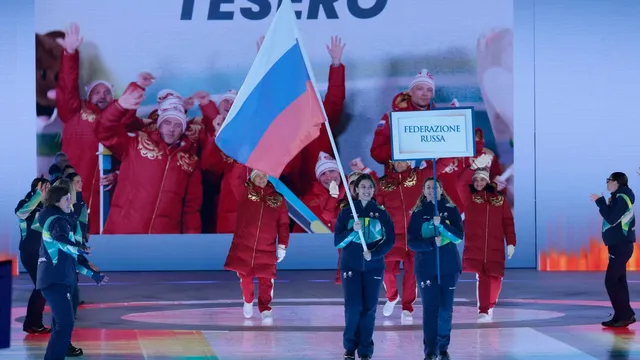
Russia and Belarus allowed to compete at Winter Paralympics amid worldwide backlash
Russia and Belarus allowed to compete at Winter Paralympics amid worldwide backlash
- The Winter Paralympics opened in Italy with Russian and Belarusian flags being displayed for the first time since the invasion of Ukraine.
- Countries including Ukraine, Poland, and Finland boycotted the ceremony in protest against this decision.
- The inclusion of Russian athletes at the Games highlights the ongoing conflict between politics and international sports.
Story
The Winter Paralympics, held in Italy, officially opened on March 6, 2026, amid significant international controversy regarding the participation of Russian and Belarusian athletes. For the first time since the invasion of Ukraine in February 2022, athletes from both nations were permitted to compete under their national flags. This decision ignited a backlash, leading Ukraine and several European countries, including Poland and Finland, to boycott the opening ceremony in protest. As tensions continue with Russia’s ongoing military actions, the presence of Russian athletes at this prestigious sporting event has stirred considerable outrage, leading to booing during the ceremony as their national flag was displayed. This marked a notable return for Russia to the international sports stage after a history of sanctions due to doping violations and geopolitical conflicts. IPC President Andrew Parsons defended the inclusion of these athletes by stating that the organization prefers to recognize countries by their athletes rather than their political leaders. While this is a significant moment in sports, it coincides with escalating global conflict and raises questions about the impact of politics on international sporting events. The atmosphere during the opening ceremony was filled with mixed reactions, highlighting increasing divisions within the world of sports and politics. Amidst protests and celebrations of athletes' achievements, the Games also marked the 50th anniversary of the Winter Paralympics, featuring over 600 athletes competing in various events. However, the political climate overshadowed the celebration of inclusivity and athletic prowess.
Context
Sports boycotts have been used as a tool for political expression and international diplomacy for decades, impacting the relationships between nations and shaping global perceptions of regimes and their policies. Historically, boycotts are employed to protest human rights violations, military aggression, or to send a message against perceived injustices. The effectiveness of such actions often depends on the level of international support and media coverage, which can amplify the intended message and place additional pressure on the targeted nation. High-profile examples include the 1980 Moscow Olympics and the 1984 Los Angeles Olympics, where the U.S. and its allies boycotted one event and the Soviet Union and its allies retaliated in the other. These actions not only affected athletes and sporting events but also strained diplomatic relations, showcasing how sports can intersect with global politics in profound ways. The impact of sports boycotts on international relations can vary significantly from case to case. When the boycott receives widespread support, it can lead to considerable economic and political repercussions for the nation being boycotted. For instance, during the South African apartheid era, the international sports boycott was instrumental in rallying global opinion against the apartheid regime, eventually contributing to its fall. Conversely, when a boycott lacks broad backing, it can fail to achieve its goals and even strengthen the resolve of the targeted government. Additionally, the increasing globalization of sports and international involvement in sporting governance complicate the dynamics of boycotts and their effectiveness as a diplomatic tool. Recent developments suggest a continued trend of leveraging sports for political purposes. Factors such as rising nationalism, geopolitical tensions, and social justice movements add complexity to the landscape of international sports. For example, the usage of sporting platforms to raise awareness about issues like climate change and human rights is growing. Notable figures in sports increasingly use their visibility to advocate for political causes, which can lead to calls for boycotts by athletes, teams, or entire sports leagues. Such actions can galvanize public opinion but also run the risk of polarizing fans and stakeholders, complicating existing diplomatic relations further. The shifting nature of international relations and the evolving role of sport in diplomacy emphasize the need for multi-faceted understanding and strategic assessment. The intersection of sports and political activism highlights both the power and the limitations of boycotts as tools for effecting change. Countries may find themselves either isolated or united through boycotts, creating nuanced implications for diplomacy. Ultimately, the effectiveness of sports boycotts will rely on collective actions, the political context of the situation, and the willingness of nations to engage in dialogue and negotiation, showcasing the intricate web of influences that define international relations.


