

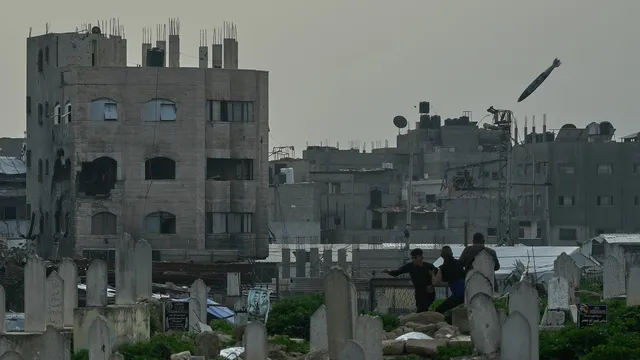
Israeli strikes kill three in Gaza amidst ceasefire tensions
Israeli strikes kill three in Gaza amidst ceasefire tensions
- Israeli military strikes on February 9 killed three people in Gaza City, according to local hospital reports.
- These strikes were reportedly in response to gunfire targeting Israeli troops in Rafah.
- The ongoing violence underscores the fragile state of the current ceasefire and the humanitarian crisis in the region.
Story
On February 9, 2026, Israeli military operations resulted in the death of three individuals west of Gaza City, as reported by Shifa Hospital. This event unfolded amid a ceasefire that has seen ongoing hostilities despite attempts for peace. The Israeli military declared that these strikes were a response to gunfire directed at its troops in Rafah, which they categorized as a violation of the ceasefire agreement. This attack adds to the mounting casualties in a conflict that has already claimed many lives since the ceasefire was established. The ceasefire, designed to offer an opportunity for peace and stability, has not fully halted violence in the region. The reported deaths highlight the fragility of this truce, as incidents such as these continue to undermine efforts for a lasting resolution to the conflict. Reports indicate that the Israeli strikes were aimed at specific targets believed to be linked to Hamas militants, revealing the ongoing military tactics employed by Israel in response to perceived threats. The situation in Gaza remains dire, with continuous fighting contributing to a growing humanitarian crisis. The local population is enduring significant hardships, exacerbated by the volatile security situation and limited access to essential services. In their statement, the Israeli military justified the recent attacks as necessary actions taken to ensure the safety of its personnel, demonstrating a pattern of escalating military engagement in response to hostilities from Gaza. International observers and human rights organizations are increasingly concerned about the implications of these strikes, particularly in light of the potential impacts on civilians and broader efforts to reach a peaceful resolution. This incident serves as a reminder of the complex challenges that persist in the region, raising questions about the stability of ceasefire agreements and the potential for renewed violence in the future.
Context
The dynamics surrounding ceasefire agreements between Israel and Hamas have been historically complex, influenced by a myriad of factors including political will, military stability, and broader regional dynamics. A ceasefire generally represents a mutual understanding between conflicting parties to halt hostilities, allowing for humanitarian relief and the possibility of diplomatic engagement. In this context, identifying the terms of ceasefires, their duration, and the conditions leading to their implementation is crucial for understanding both short-term relief efforts and long-term peace prospects in the region. Previous agreements have often been characterized by qualitative discrepancies, where one party may perceive the ceasefire as a strategic pause while the other sees it as a pathway toward lasting peace. Consequently, the analysis of past ceasefire agreements is essential for anticipating and shaping future negotiations, as well as understanding the likelihood of resumption of hostilities following their expiration or violation. One prominent factor in the fluctuating success of ceasefire agreements is the role of external actors. Regional powers, international organizations, and various Non-Governmental Organizations (NGOs) have all played a role in mediating ceasefires. The effectiveness of these external interventions is variable, depending on their leverage and the genuine commitment of the parties involved to uphold and respect the terms set forth. For instance, the Egyptian government has historically acted as a mediator, facilitating negotiations that led to temporary ceasefires. However, these agreements are often short-lived, reflecting deep-seated mistrust. Many of the ceasefire accords have been undermined by unilateral actions or military escalations which lead to violent confrontations shortly after agreements are reached. Therefore, understanding the interplay between local actors and external pressures is key to assessing the sustainability of such agreements. Moreover, the social and economic undercurrents present in the Israel-Hamas conflict significantly affect ceasefire negotiations. The socioeconomic conditions in Gaza, including unemployment, poverty, and infrastructure decay, play a critical role in shaping the motivations of Hamas. In turn, the persistent state of insecurity and military operations by Israel shapes its decision-making process during ceasefires. A successful and enduring ceasefire oftentimes requires addressing these underlying conditions, as mere cessation of hostilities without corresponding humanitarian support tends to perpetuate cycles of violence. Additionally, public sentiment on both sides can impose constraints on political leaders, who may struggle to justify concessions or negotiations perceived as compromising their side's position. Ultimately, the historical pattern of ceasefire agreements between Israel and Hamas reveals a cycle of opportunity and setback, shaped by a complex web of political, social, and external factors. Analyzing these agreements over time emphasizes the need for a multifaceted approach that not only seeks immediate cessation of violence but also implements long-term frameworks for economic and social recovery. Historical patterns suggest that genuine engagement towards addressing both the needs of the people affected by the conflict and the political aspirations of both parties will be essential for any ceasefire to lay the foundation for lasting peace. Considerations for future agreements should focus on building trust, ensuring humanitarian access, and promoting dialogue to resolve underlying grievances that have exacerbated tensions. As situations evolve, continuous monitoring and engagement by proactive diplomatic efforts remain vital.


