

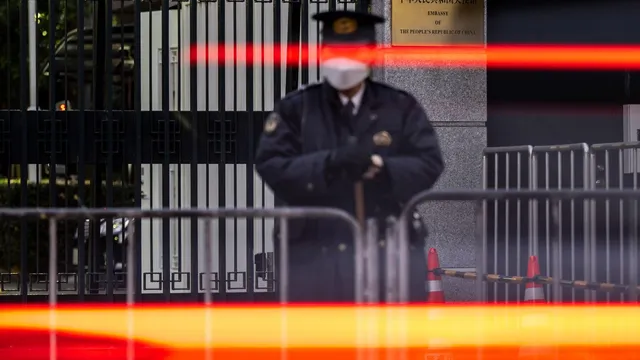
Japanese soldier breaks into Chinese embassy and threatens diplomats
Japanese soldier breaks into Chinese embassy and threatens diplomats
- A Japanese national claiming to be a soldier broke into the Chinese embassy, threatening diplomats.
- China expressed deep shock at the incident, demanding a thorough investigation from Japan.
- The break-in reflects the rising tensions and far-right ideologies impacting Sino-Japanese relations.
Story
In a disturbing incident that unfolded at the Chinese embassy in Tokyo, a Japanese national claiming to be a soldier scaled the embassy wall and forcibly entered the premises. This occurred on a Tuesday morning, prompting immediate security concerns from Chinese officials. The individual allegedly threatened to kill the diplomats present, claiming to act in the name of God. Fortunately, no embassy staff were reported injured during the intrusion. A knife was recovered at the scene, leading to escalating alarm regarding the safety of diplomatic personnel. The Chinese foreign ministry expressed its shock at the event, stating that it seriously violated the Vienna Convention on Diplomatic Relations and posed a severe threat to the personal safety of diplomats and the security of diplomatic facilities. A spokesperson for the ministry emphasized the egregious nature of the act, linking it to an alleged rise of far-right ideologies in Japan. The incident drew widespread international attention, especially given the historical context of Sino-Japanese relations. In response, China lodged a formal protest with Japan, demanding a thorough investigation into the matter. It called for the immediate punishment of the individual involved and for Japan to ensure the safety of its diplomatic missions. This incident comes amidst already strained relations between the two nations, exacerbated by previous political tensions surrounding Taiwan. Japan's defense ministry acknowledged the situation and stated it was confirming the facts surrounding the alleged break-in. The diplomatic ties have been fragile in recent months, especially following comments made by Japanese Prime Minister Sanae Takaichi regarding potential military responses to Chinese actions towards Taiwan. These remarks had led to a series of diplomatic and economic reprisals from China, including restrictions on Japanese seafood imports. The break-in incident has further intensified discussions on the necessity of proper management and discipline within Japan's Self-Defense Forces, reflecting broader concerns about security in the region.
Context
policy policy geopolitical data policy insight geopolitical global strategic data trends data strategic economic analysis strategic insight policy economic geopolitical trends policy trends impact policy analysis shift economic shift strategic strategic geopolitical data analysis impact shift policy strategic economic data analysis insight shift economic market insight policy market impact insight insight insight shift policy trends economic shift shift global policy market impact market market analysis insight impact geopolitical market strategic impact shift economic global impact data trends impact shift data...


