

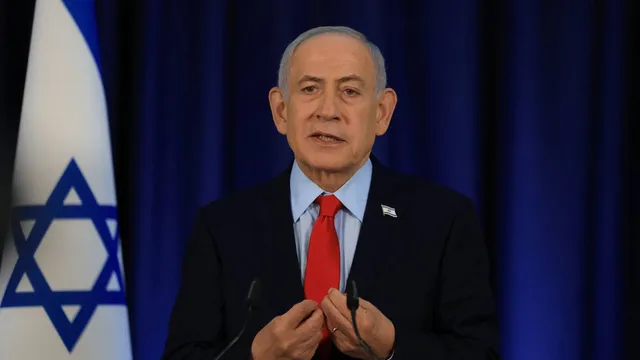
Netanyahu sparks outrage with controversial Jesus Christ remark
Netanyahu sparks outrage with controversial Jesus Christ remark
- Benjamin Netanyahu generated controversy by stating that strength is more critical than morality in global affairs during a recent press conference.
- His comparison of Jesus Christ to Genghis Khan, citing historian Will Durant, has sparked significant backlash among Christian communities.
- The incident illustrates ongoing tensions in the U.S.-Israeli relationship and the complexities of political discourse in relation to faith and military strategies.
Story
In Jerusalem, on March 19, 2026, Israeli Prime Minister Benjamin Netanyahu made controversial remarks during a press conference, asserting that historical context shows no inherent advantage of Jesus Christ over Genghis Khan. This statement was based on his reading of historian Will Durant's works, particularly 'The Lessons of History.' Netanyahu emphasized that strength and power are critical in a world where morality alone is insufficient to ensure survival. His assertions ignited significant backlash, especially among Christian communities, prompting Netanyahu to clarify that he did not intend to denigrate Jesus Christ and expressed his admiration for Jesus within the context of Israel's societal values. He characterized the outrage as 'fake news' and noted that Christians are protected and thriving in Israel, further arguing that a naive approach to global affairs is dangerous. Netanyahu's comments occurred within a broader discussion regarding U.S.-Israeli military strategies amid escalating conflicts in the Middle East, particularly the ongoing conflicts with Iran. The backlash against Netanyahu shows a prevailing tension within American conservative groups, displaying divisions particularly between Christian Zionists and other Christian factions concerning support for Israel and its military actions. This incident highlights the complexities of political discourse around figures like Netanyahu, drawing attention to how comments made in political and military contexts can have significant cultural ramifications and lead to national and international debates on moral standards, strength, and historical perspective.


