

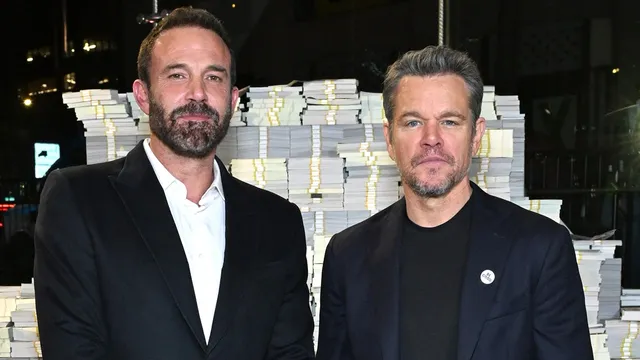
Matt Damon and Ben Affleck slam cancel culture for its unforgiving nature
Matt Damon and Ben Affleck slam cancel culture for its unforgiving nature
- Matt Damon and Ben Affleck discussed the consequences of cancel culture on "The Joe Rogan Experience."
- Both actors emphasized the lack of forgiveness within cancel culture and its long-lasting effects on individuals.
- Their comments sparked renewed interest from Amanda Knox, who criticized Damon's remarks and highlighted the severe impact on mental health.
Story
In January 2026, Ben Affleck and Matt Damon appeared on "The Joe Rogan Experience" to discuss their new Netflix film, "The Rip." During the interview, they expressed their concerns about cancel culture, asserting that it creates permanent outcasts and lacks the ability to foster forgiveness. Matt Damon argued that individuals who have been publicly canceled might prefer a conventional punishment, such as a jail sentence, over enduring the never-ending social stigma that comes with being labeled as canceled. He highlighted that the repercussions of such public condemnation can follow a person for their entire life. Affleck echoed Damon's sentiments, indicating that there is a darker side to society's response to those who are canceled. He noted that people often take pleasure in witnessing others' misfortunes, suggesting that it serves as a way for them to momentarily divert attention from their problems. Affleck criticized the idea of eliminating forgiveness from the equation, emphasizing that it is damaging to label someone solely by their worst moment in life. Both actors lamented that once someone has been called out publicly, their past mistakes tend to overshadow any positive aspects of their character. Their criticism extended to the broader implications of cancel culture on society, noting that it fosters a conditional acceptance of individuals rather than a holistic understanding of their character. The conversation gained additional attention when Amanda Knox responded to Damon's remarks, reigniting a feud that stems from her real-life wrongful conviction, which inspired Damon's film "Stillwater." Knox rebuked Damon for minimizing the severity of cancel culture's consequences, indicating that it can lead to dire mental health crises, including suicide. This public exchange highlights an ongoing discourse surrounding cancel culture, its effects on the individuals involved, and the societal dynamics that contribute to this phenomenon. Affleck and Damon's interview serves to create awareness about the issues surrounding societal judgment and the need for compassion and empathy in public discourse. While their film aims to explore these themes in narrative form, the actors' comments underscore the importance of dialogue in addressing the complexities of human behavior and societal expectations in the age of social media.


