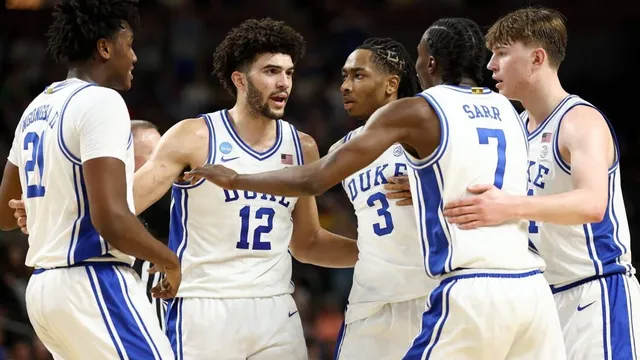
In recent years, the perception of Duke basketball has shifted significantly, particularly among rival fans and analysts. This change has been noted particularly in the context of social media and television ratings, where Duke has emerged as one of the most popular college basketball teams. An interesting commentary by Jay Bilas, a former Duke player and now ESPN analyst, highlights how traditional reasons for disliking the team are not as prevalent today. Rival fans used to harbor a deep-seated hatred for players like Christian Laettner and Jay Bilas, contributing to Duke’s reputation as a perennial villain in college basketball. However, the team's recent decline in championships and big wins might have contributed to a new narrative, one wherein they are viewed as the underdog rather than the dominant force they once were. Furthermore, the players themselves, such as Cooper Flagg and Jared McCain, are seen as more likable and unassuming individuals, diverging from the typical 'villain' role that Duke players historically held. Accordingly, discussions about race and how it influences perceptions in basketball have also evolved, further shaping the modern view of the team. The comprehensive conversation surrounding Duke's image in NCAA basketball is not just a reflection of its performance but also of societal changes in how teams and players are perceived. As the rivalry landscape continues to evolve, it raises questions about the nature of fandom, hate, and the experiences that come with following college sports. The change in sentiments around Duke could signal a vital transition back to appreciating the competitive nature of the game, breaking away from the habit of hatred that has persisted for decades. Meanwhile, in women's college basketball, players like Toby Fournier are reshaping the game's narrative with impressive skills rather than relying solely on dunking, marking a trend toward recognition of women's contributions beyond athletic feats. Fournier's path reflects a broader cultural shift toward valuing a comprehensive skill set and sportsmanship in the women's game, paralleling changes witnessed in men's basketball. Her evolution as a player demonstrates that individual talent can help dismantle stereotypes often tethered to the women's game.