

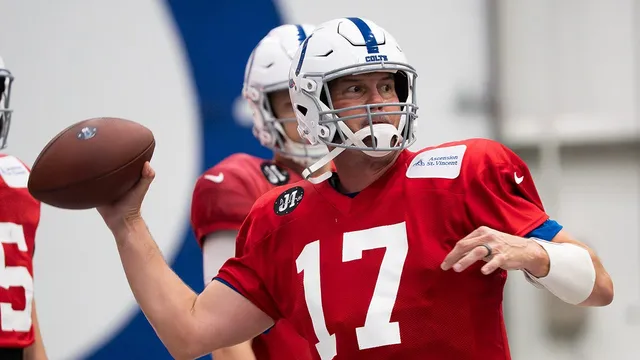
Philip Rivers returns to NFL after five-year retirement
Philip Rivers returns to NFL after five-year retirement
- Philip Rivers has signed with the Indianapolis Colts following their starting quarterback's injury.
- Rivers has remained involved in football through coaching high school teams yet found the opportunity to return appealing.
- His return to the league could be pivotal for the Colts as they seek to secure a playoff position.
Story
In a surprising turn of events for American football, Philip Rivers, a prominent former quarterback who last played in the NFL in January 2021, has come out of retirement. The Indianapolis Colts signed Rivers to their practice squad recently as their season faced a critical moment. With starting quarterback Daniel Jones out for the remainder of the season due to an Achilles injury, the Colts are seeking to bolster their roster and improve their playoff chances. Rivers is expected to provide valuable experience and leadership as the team fights for an AFC wild-card spot. Rivers, 44, has a rich history in the NFL, having spent 16 seasons with the Los Angeles Chargers before one season with the Colts. His initial retirement came following an 11-5 season with the Colts, in which he led the team to the playoffs. Despite stepping away from the game, Rivers has remained connected to football through coaching high school teams in Alabama. However, the recent injuries within the Colts roster created an opportunity that he found too enticing to refuse. Kevin O'Connell, head coach of the Minnesota Vikings and a former acquaintance from Rivers' days in San Diego, commented positively on Rivers' potential return, noting his dedication to the sport. Rivers has kept himself in shape, even mentioning that he has a practice field at home. His family, including his wife Tiffany and their ten children, have expressed mixed feelings about his decision; while they are excited, there is a shared sense of nervousness regarding the physical toll the game may take on him. As the Colts prepare for their upcoming games, there’s palpable excitement and curiosity within the franchise and among fans about Rivers' impact on the field. The combination of his previous NFL experience and the current team dynamics could either be a crucial turning point for the Colts or simply a nostalgic chapter for Rivers as he transitions back into the competitive world he embraced for so long.
Context
The phenomenon of NFL players returning from retirement has become increasingly prevalent in recent years. Several factors contribute to this trend, including financial incentives, the enduring passion for the game, and the evolving nature of player conditioning and recovery. As athletes retire, many continue to feel a strong attachment to their teams and the sport itself, prompting them to consider a return. Additionally, substantial contracts and lucrative endorsement deals often entice players to make a comeback, especially if a team is in need of their skills to make a playoff push or win a championship. Furthermore, advancements in sports medicine and training have altered the landscape for athletes considering a return. With innovative recovery techniques and improved physical conditioning practices, many retired players believe they can regain peak performance levels more effectively than in the past. This has led to cases where players, even after several years away, feel physically and mentally prepared to return to the field, often surprising fans and analysts alike with their performances. The example set by players like Tom Brady, who defied age and expectations by returning for multiple seasons after initially retiring, has inspired others to contemplate similar paths. However, returning from retirement is not without its risks and challenges. The mental aspect of re-adjusting to the game's physical demands can be daunting. Players often face scrutiny from fans and media regarding their decision to return, questioning their motives and readiness. Additionally, the competitive nature of the NFL means that players who have been away, no matter the reason, must compete against younger, possibly faster, and more agile athletes who have spent the intervening years gaining experience and rigors of professional play. This adds pressure not only to perform at a high level but also to step seamlessly back into the team dynamic, which may have evolved in their absence. In conclusion, the actions of NFL players returning from retirement highlight a combination of personal passion, financial motivations, and advancements in player health management strategies. While this trend brings excitement to the league and fans, it also poses unique challenges that must be navigated carefully. As more players attempt to make come-backs, the impact on the league's landscape, both in terms of team dynamics and player development, will continue to evolve, offering new narratives and stories in the sports world.


