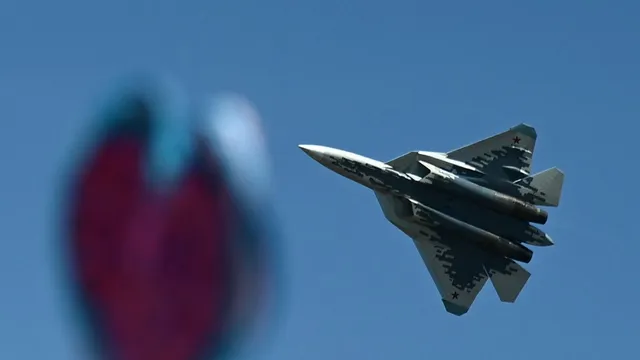
In a significant escalation of the ongoing conflict, Russia deployed its latest-generation Su-57 stealth fighters to intercept Ukrainian drones during an attack on the Omsk oil refinery on July 6, 2026. This attack marked a notable deep strike by Ukraine, occurring over 3,000 kilometers from the Ukrainian border, indicating a shift in the operational capabilities of the Ukrainian military. Local footage captured the Su-57s in action, but reports indicate that they were only able to down one drone, while others successfully reached their targets, resulting in damage to the refinery.
The Omsk oil refinery, identified as Russia's largest, processes approximately 22 million metric tons of crude oil annually, translating to about 440,000 barrels per day. The facility is crucial for Russia's fuel production, generating around 5 million tons of gasoline and 8 million tons of diesel. Following the attack, operations at the refinery were halted, although the extent of the damage and the specific refining units affected remain unclear. This incident underscores the vulnerability of critical infrastructure in Russia amidst the ongoing conflict.
The deployment of the Su-57s, which are known for their stealth capabilities, has been limited throughout the conflict, likely due to concerns over their potential loss to Ukrainian forces. With only about 30 units currently operational, Russia's planned delivery of 76 additional airframes by 2027 appears to be falling short. The Su-57s have been primarily relegated to anti-drone duties, as evidenced by recent sightings of the jets equipped with air-to-air missiles on their wing pylons, which compromises their stealth capabilities.
This incident not only highlights the ongoing military tensions between Russia and Ukraine but also raises questions about the effectiveness of Russia's air defense systems. The fact that Ukrainian drones were able to strike deep into Russian territory suggests a significant shift in the balance of power and operational strategy. As the conflict continues to evolve, both sides are likely to reassess their military strategies and capabilities in response to these developments.