

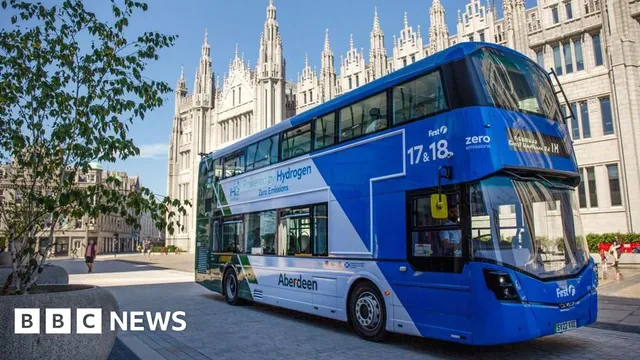
Aberdeen abandons hydrogen double-decker buses in favor of electric vehicles
Aberdeen abandons hydrogen double-decker buses in favor of electric vehicles
- The hydrogen double-decker bus fleet in Aberdeen has been discontinued due to technical problems.
- The city council decided to replace hydrogen buses with electric vehicles after ongoing discussions with BP.
- The shift reflects a larger trend towards electric vehicles in public transport, questioning the viability of hydrogen solutions.
Story
The project involving the world's first hydrogen double-decker bus fleet in Aberdeen, Scotland, initiated with the aim of leading a clean public transportation revolution, has come to an end. Initially launched with significant investment, the fleet included 25 buses and was expected to create around 700 jobs within the city. However, since September 2024, the hydrogen buses were sidelined due to various technical issues related to fuelling infrastructure at the designated stations in Kittybrewster and Cove. The decision to abandon the hydrogen fleet comes after the council’s urgent business committee meeting where it was determined that transitioning to electric vehicles would be more beneficial. Discussions and evaluations with BP, the project’s commercial partner, indicated that advances in electric vehicle technology significantly outpaced those in hydrogen-powered systems. The council recognized that demand for hydrogen in transportation has diminished as more cities are opting for battery-operated alternatives. Historically, the writing was on the wall for the hydrogen initiative as electric vehicles began gaining preference in 2021. First Bus in Glasgow had begun investing heavily in electric buses capable of rapid overnight charging, which could operate for extended periods on the road. Similarly, Ember's electric inter-city bus services showcased a significant growth in fleet size, underscoring the industry's shift away from hydrogen towards battery technology. Even though the hydrogen buses could be refueled rapidly, their operational costs remained a point of concern, as the production of hydrogen fuel is expensive and energy-intensive. Ultimately, the shift to electric vehicles reflects a broader trend where manufacturers favor technological advancements that promise better economic viability. This substantial pivot has implications not only for the future of public transportation in Aberdeen but also for the plans surrounding the city’s status as a hydrogen hub. As the council reassesses its strategic direction, the situation poses critical questions about the feasibility and sustainability of hydrogen transport solutions, making it evident that the market is evolving swiftly towards more reliable and cost-effective options.


