

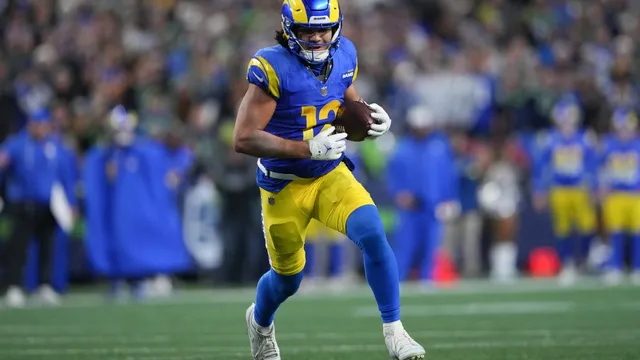
Puka Nacua faces backlash over antisemitic tropes in livestream
Puka Nacua faces backlash over antisemitic tropes in livestream
- Nacua attempted to livestream with Adin Ross and N3on at the Rams' facility days before an important game.
- A previous incident involved Nacua breaking team protocol by livestreaming post-game, despite warnings.
- Concerns were raised regarding Nacua's execution of a touchdown dance with antisemitic connotations during a recent livestream.
Story
In December 2025, controversy surrounded Puka Nacua, a rising star in the NFL, after he attempted to livestream with popular internet personalities Adin Ross and Mikyle 'N3on' Rafiq right before a crucial game. This incident occurred at the Los Angeles Rams training facility, where Nacua faced opposition from his team after he tried to bring the livestreamers in. The Rams were preparing to play against the Seattle Seahawks in what could be a pivotal matchup for the playoffs. Prior to this, Nacua ignited criticism for breaking NFL protocols by livestreaming after a game, defying the warnings of teammates. In addition, his involvement with these polarizing figures led to further scrutiny after Nacua performed a touchdown dance with antisemitic undertones during a livestream appearance. Many viewers expressed concern over these remarks and gestures, and commentators suggested Nacua appeared either uneducated about the implications of his actions or willingly perpetuating harmful stereotypes. The league has yet to respond to the incident, raising questions about potential penalties or repercussions for Nacua and the Rams organization. The spotlight on Nacua and the involvement of his team quickly turned the focus onto broader implications for player behavior in the age of social media. The NFL has been navigating the complexities of its players' online interactions, with both compliance to league policies and the potential fallout from social commentary being at the forefront. Observers suggest that, while Nacua has been seen as a talented and commendable player, these actions could complicate his reputation and future with the Rams, especially with discussions of a potential contract extension on the horizon. As analysis continues, this story highlights the challenges that come with fame in a fast-paced digital world. Nacua's actions not only risk personal consequence but also invite the NFL to reassess its approach to player engagements online. As fans and society demand accountability, Nacua's future performance, actions, and any potential statements made by the Rams or the NFL will likely be closely monitored. This unfolding situation underlies the intersection of sports, media, and social responsibility.
Context
The NFL has implemented strict policies regarding player livestreaming to protect the integrity of the game and the interests of the league. As social media and technology have evolved, the NFL recognized the need to establish guidelines that govern how players can interact with fans and share their experiences through livestreaming platforms. These policies aim to prevent the dissemination of sensitive game information, protect the privacy of players and coaches, and maintain the league's brand integrity. By defining clear boundaries around livestreaming, the NFL ensures that players can engage with their audience in a responsible and compliant manner. Players are encouraged to use their platforms to connect with fans, but they must adhere to specific regulations set forth by the league. For instance, players are prohibited from livestreaming during games, practices, or any official team events. This policy is in place to mitigate risks associated with oversharing team strategies or providing opponents with competitive advantages. Additionally, the NFL mandates that any personal livestreams should not interfere with a player's focus, responsibilities, or commitment to their team. Ensuring that social media engagement does not detract from performance on the field is a critical aspect of the league's approach to player communication. Moreover, the NFL's policies on player livestreaming extend to include guidelines on content sharing. Players must be mindful not to share any proprietary team material, including playbooks, specific game plans, or injury information. Violations of these policies can result in disciplinary action, which serves as a significant deterrent for players who might attempt to skirt the rules. The league continuously monitors social media interactions to uphold these standards and foster a safe, competitive environment. In conclusion, the NFL's policies on player livestreaming are designed to balance players' desire for social interaction with the league's need for confidentiality and integrity. By establishing these guidelines, the NFL protects its brand while allowing players to thrive in the digital age. As the landscape of social media continues to evolve, the league is likely to adapt its policies accordingly, ensuring that they remain relevant and effective in managing player engagement with fans.


