

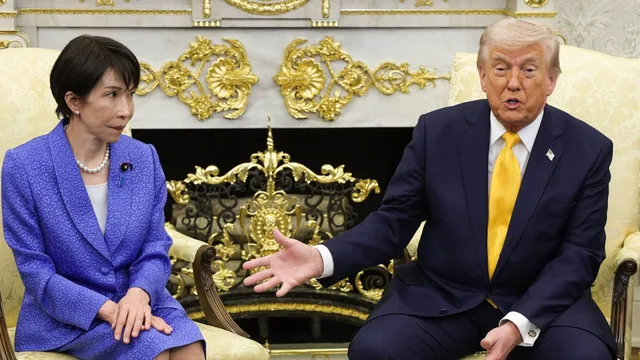
Trump jokes about Pearl Harbor at press conference with Japanese PM
Trump jokes about Pearl Harbor at press conference with Japanese PM
- During a February 2020 press conference, Donald Trump spoke alongside Japanese Prime Minister Sanae Takaichi about U.S. strikes on Iran.
- Trump made a controversial joke referencing the 1941 Pearl Harbor attack, suggesting that surprise is key in military action.
- This comment highlighted ongoing tensions in U.S.-Japan relations and raised questions about Japan's role in regional security efforts.
Story
On February 28, 2020, President Donald Trump met with Japanese Prime Minister Sanae Takaichi at the White House, where the discussion was initially expected to focus on trade, energy cooperation, and security issues in Asia. However, during the press conference, when asked by a Japanese journalist about the lack of warning given to allies regarding U.S. strikes on Iran, Trump evoked Japan’s historical attack on Pearl Harbor from 1941 to defend the element of surprise in military operations. His response included a humorous remark directed at Takaichi, stating, 'Who knows better about surprise than Japan? Why didn’t you tell me about Pearl Harbor?' This remark elicited laughter from some attendees but also created a moment of silence in the room. The exchange highlighted the ongoing tension surrounding U.S. military actions and Japan's role in regional security, particularly amid rising worries regarding the Strait of Hormuz, a vital shipping lane impacted by conflicts in the Middle East, especially regarding oil supplies. Takaichi's visit came at a critical juncture, as Japan grappled with its diplomatic stances and the constraints imposed by its constitution, which limits military engagement abroad. Moreover, her acknowledgment of the potential economic fallout due to the Iran conflict further emphasized the delicate balance Japan is attempting to maintain with its security relationship with the United States while addressing domestic pressures. The Pearl Harbor joke was not only a reference to a historical event that resulted in 2,403 American deaths but also served to underscore the complexities and sensitivities involved in the current geopolitical climate. It raised questions about U.S. interactions with its allies and the expectations placed upon nations reliant on Middle Eastern energy supplies to contribute to regional security efforts, a topic that Takaichi noted would need to be addressed in their discussions moving forward.


