

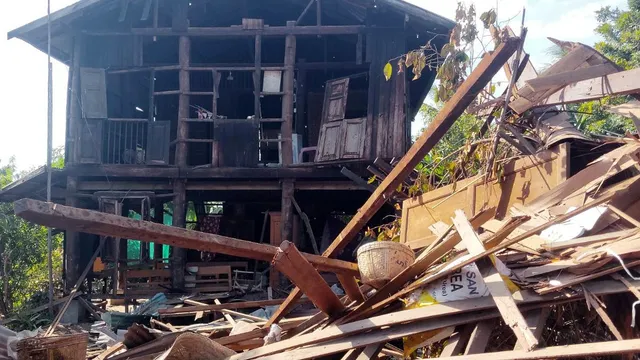
Myanmar military air strike kills 18 civilians in tea shop
Myanmar military air strike kills 18 civilians in tea shop
- On December 5, 2025, an air strike by Myanmar's military occurred in a tea shop in Sagaing region.
- The attack resulted in at least 18 civilian fatalities, including a child and two schoolteachers.
- This incident exemplifies the rising trend of military air assaults amid the ongoing conflict in Myanmar.
Story
Myanmar has been experiencing significant turmoil since the military took control of the government on February 1, 2021, overthrowing the elected administration of Aung San Suu Kyi. This shift has led to widespread civilian unrest and a powerful resistance movement against the military's rule. One recent incident occurred on December 5, 2025, in the Sagaing region, where an air strike by the military targeted a tea shop during a community football viewing, resulting in the deaths of at least 18 civilians, including a five-year-old child and two schoolteachers. Eyewitness accounts suggest that many victims had little time to react, as the bombs dropped shortly after air raid sirens sounded. Furthermore, over 20 homes nearby suffered damage due to the blasts, with civilians having fled the village after the funeral for the victims was held shortly thereafter. This attack highlights the increasing frequency of military air strikes in the region, which aim at pro-democracy forces amidst the country's approaching elections scheduled for December 28. The military government has justified these actions as necessary for reclaiming territory from the armed resistance, which primarily comprises the People’s Defense Force and various ethnic militias. However, concerningly, these resistance forces currently possess no means to defend themselves against aerial attacks. The military's lack of announcements regarding these strikes raises suspicions and concerns among the local populace, forcing some residents to construct bomb shelters in anticipation of future assaults. As the country's situation deteriorates, the humanitarian consequences of these military operations continue to escalate.
Context
The overthrow of Aung San Suu Kyi's government in Myanmar has profound implications for the nation and the broader Southeast Asian region. Following the military coup on February 1, 2021, which resulted in her arrest and the detention of numerous political leaders, Myanmar has faced significant political instability. The military junta's assumption of power has not only undermined a decade of democratic reforms but has also sparked widespread protests and civil disobedience across the country. Many citizens have expressed their resistance, leading to escalating violence as the military responds harshly to dissent. As of December 2025, conditions remain volatile, with ongoing clashes between armed resistance groups and state security forces, reflecting the deepening divisions within the society. The international community's reaction to the coup has been varied, with several countries imposing sanctions on military leaders and businesses linked to the junta. The Association of Southeast Asian Nations (ASEAN) has faced challenges in addressing the situation, grappling with its principle of non-interference while attempting to facilitate dialogue among conflicting parties. Diplomatic efforts remain fragmented, revealing tensions within ASEAN itself and highlighting the complexities of regional politics. The situation presents a moral dilemma for neighboring countries, as they must balance their economic interests with the need to advocate for the restoration of democracy and human rights in Myanmar. The humanitarian implications of the coup are dire. Millions of people in Myanmar face increased poverty, food insecurity, and a collapse of public services due to the conflict and economic downturn triggered by the junta's actions. The health sector has also been severely impacted, particularly in the wake of the COVID-19 pandemic, which has strained resources and hindered responses to health crises. Internally displaced persons (IDPs) are on the rise as a result of the ongoing conflict, further exacerbating humanitarian challenges and forcing humanitarian organizations to navigate complicated access issues in aid delivery. The implications of Aung San Suu Kyi's government being overthrown extend beyond Myanmar. The situation poses a test for democratic norms and governance in the region, raising concerns about the potential for similar military takeovers in neighboring states. Furthermore, it has sparked debates on the resilience of civil societies and the role of international powers in promoting democratic values. As the conflict continues, the future of Myanmar remains uncertain, with the possibility of either a prolonged struggle for democracy or a return to authoritarianism depending on the outcome of ongoing resistance efforts and international responses.


