

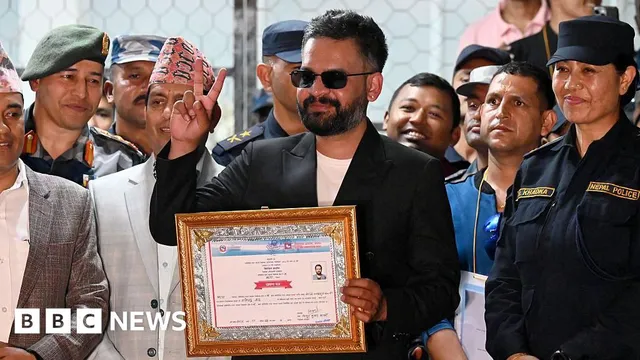
Ex-rapper Balendra Shah leads RSP to a historic victory in Nepal's election
Ex-rapper Balendra Shah leads RSP to a historic victory in Nepal's election
- Following months of protests against corruption, Nepal held its parliamentary election, resulting in a new political force gaining significant traction.
- The Rastriya Swatantra Party led by Balendra Shah emerged victorious, securing 182 out of 275 seats in the House of Representatives.
- Shah's leadership marks a shift in Nepal's political landscape, but the party faces challenges in delivering promised reforms while maintaining parliamentary unity.
Story
Nepal recently witnessed a significant political shift as a new political party emerged victorious in the parliamentary election held after a youth-led revolt. The Rastriya Swatantra Party (RSP), founded only four years ago and led by former rapper Balendra Shah, secured a total of 182 seats in the 275-member House of Representatives. This election marked the first in the aftermath of the protests against corruption, with the results being officially announced on a Thursday. The RSP's sweeping majority in the lower chamber positions them as a formidable force against established parties such as the Nepali Congress and the Communist Party of Nepal (Unified Marxist–Leninist). The recent electoral success comes on the heels of widespread dissatisfaction among citizens regarding long-standing issues of corruption and political paralysis. Many voters expressed their hope for substantial change following decades of governance perceived as ineffective and plagued by bureaucratic inefficiencies. The election followed a turbulent period where massive protests led to significant unrest, which included the ousting of former Prime Minister Khadga Prasad Oli. Shah, having previously won the mayoral race in Kathmandu, has been recognized as a pivotal figure emerging from this backdrop of protest and demands for transparency in governance. While the RSP's victory is hailed as historic, the party faces considerable challenges ahead. As the new governing body, they are tasked with meeting the high expectations of a population eager for quick and effective reforms. Shah's administration has pledged to confront corruption, attempt to revitalize an economy increasingly reliant on remittances, and ensure institutional reforms within the civil service. On the other hand, political analysts have raised concerns over maintaining party cohesion and focus among the new MPs, indicating the possibility of internal disorganization that could dilute the party's mandate. Despite the optimism surrounding the RSP's ascent, it is crucial to recognize the complexities embedded in Nepal's political landscape. The nation has traditionally operated under a system that has favored a political elite, which may complicate RSP's reformist agenda. Navigating these realities while forging meaningful changes could prove to be their biggest challenge as the country takes its first steps into an uncharted political future under a youthful and relatively inexperienced party.


