

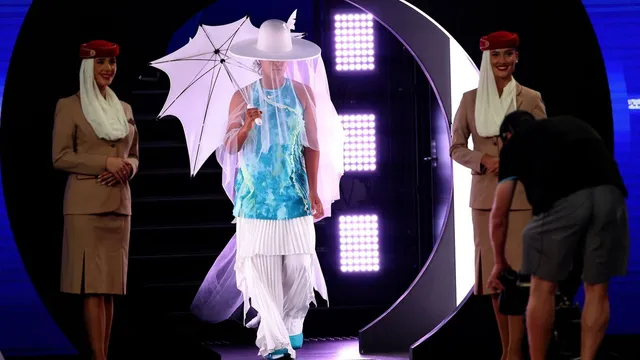
Naomi Osaka dazzles with jellyfish outfit while winning first-round match
Naomi Osaka dazzles with jellyfish outfit while winning first-round match
- Naomi Osaka entered the Australian Open wearing a jellyfish-themed outfit designed by Robert Wun.
- She faced Anonia Ruzic in the first round, winning a challenging match in three sets.
- Osaka aims to continue her success in the tournament and make a strong statement in her comeback.
Story
In Melbourne, Australia, Naomi Osaka made a stunning entrance at the Australian Open in January 2026, sporting a jellyfish-inspired outfit featuring a wide-brimmed hat, a flowing veil, and a parasol. Her creative outfit not only captured the attention of the crowd but also put pressure on her opponent, Antonia Ruzic, who ranked 65th in the world, as they faced off on Rod Laver Arena. Osaka began the match with a strong performance, winning the first set 6-3, but Ruzic staged a comeback to take the second set 6-3, pushing the match to a decisive third set. Ultimately, Osaka's experience shone through as she secured a hard-fought victory with a final score of 6-3, 3-6, 6-4, advancing her to the second round. Osaka had previously expressed that her outfit was designed by couturier Robert Wun, inspired by a picture of a jellyfish that excited her young daughter, Shai. This playful decision sparked discussions about her personality, being both fashion-forward and carefree in her approach to competition, further emphasizing her role as a unique figure in the world of sports. The victory marks an important moment for Osaka as she aims to reclaim her status in tennis, with her next match scheduled against Romania's Sorana Cirstea. This event not only highlighted her fashion statement but also reiterated her capability as a top competitor on the tournament stage.
Context
Naomi Osaka, a prominent figure in the world of tennis, has sparked considerable conversation around her choice of outfits during various tournaments. Known not only for her exceptional skills on the court but also for her bold fashion statements, Osaka has consistently used her platform to express her individuality and advocate for social issues. However, her fashion choices have often drawn scrutiny and debate, raising questions about the intersection of sports, fashion, and personal expression. This report aims to delve into the various aspects that make Naomi Osaka's outfits controversial, reflecting broader themes of identity, culture, and societal expectations in professional sports. One of the pivotal moments that put Osaka's outfits in the limelight was her decision to wear masks featuring the names of victims of racial injustice during the 2020 US Open. This move was both a statement of solidarity with the Black Lives Matter movement and a defiance against social injustices. While many praised her for using her platform to raise awareness, others criticized her for potentially politicizing the sport. Additionally, her choice to wear a combination of traditional Japanese garments and contemporary fashion elements underscores her unique cultural heritage, simultaneously honoring her background and attracting controversy over appropriateness and commercialization of cultural symbols in sports. Moreover, Osaka's outfits often exceed traditional expectations of tennis attire, which has led to divided opinions among fans, players, and officials. In several instances, her sartorial decisions—whether it be bold colors, unconventional designs, or statement pieces—have sparked discussions about gender norms in sports and whether female athletes should conform to specific standards of femininity. This dialogue ties into larger conversations around athleticism, the empowerment of women in sports, and the liberation from archaic dress codes that have historically constrained female competitors. Osaka's approach has undeniably challenged the status quo, prompting an important conversation regarding how female athletes self-present. Critics argue that the focus on her fashion choices detracts from her performance and highlights a systemic issue in sports where female athletes often face scrutiny based on appearance rather than their athletic capabilities. While Osaka’s bold choice of outfits might seem merely aesthetic, they resonate with underlying messages that resonate well beyond the tennis court. Ultimately, Naomi Osaka's controversial outfits serve as symbols of personal expression, cultural identity, and social commentary, prompting vital discussions about representation and empowerment within the sports community. Through her individual style, she continues to pave the way for a new generation of athletes who prioritize authenticity and use their influence to spark important societal conversations.


