

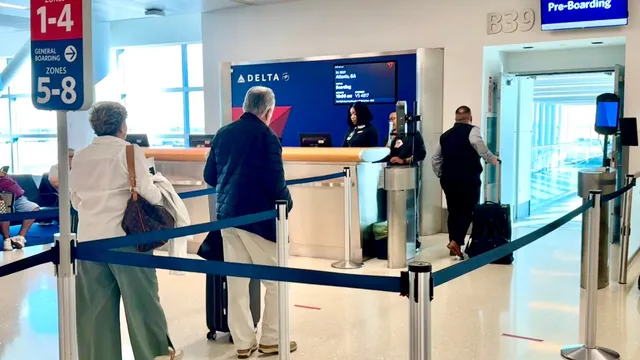
Airlines raise baggage fees as oil prices soar
Airlines raise baggage fees as oil prices soar
- Airlines in the U.S. have increased checked baggage fees due to the surge in fuel prices linked to the Iran war.
- Delta Air Lines implemented its first baggage fee increase in two years, effective April 8, raising fees for the first two bags by $10 and the third bag by $50.
- This trend is expected to become the norm across more carriers, indicating a likely persistence of higher baggage costs for travelers.
Story
In the United States, major airlines have increased checked baggage fees due to surging fuel costs linked to the ongoing conflict in the Middle East. Delta Air Lines announced that as of April 8, 2026, checked baggage fees will rise by $10 for the first two bags and by $50 for the third bag. The airline's capacity growth outlook has been negatively affected by these rising fuel costs, which are projected to stay elevated for a prolonged period. This decision is part of a wider trend in the airline industry as carriers like United Airlines and JetBlue have also adjusted their fees in response to similar pressures. The adjustments by these airlines reflect a broader challenge faced by the aviation industry, as jet fuel prices have nearly doubled since the onset of the Iran war, pushing operating costs significantly higher. Industry experts suggest that these fee increases are likely permanent given that baggage fees tend to remain stable even after fluctuations in fuel prices. Airline CEOs have indicated that they view the increased operating costs from fuel prices as a critical challenge that directly impacts their pricing strategies and overall capacity management. Travelers are thus left to navigate a changing landscape where air travel costs are rising, potentially impacting summer travel plans as prices for both tickets and baggage soar. With airlines reducing capacity growth in reaction to fuel price instability, passengers can expect tougher market conditions and increased expenses in the near future. The situation emphasizes the tight link between geopolitical events and consumer costs in the airline sector, where operational adjustments are a necessary but unpopular response to external pressures. As airlines adapt to this new environment, it remains to be seen how passengers will respond to these increased fees. The expectation is that demand will continue even as prices rise, especially for business travelers seeking more premium travel experiences. Airline executives remain hopeful about maintaining passenger numbers despite the price hikes, while simultaneously acknowledging that they have to balance rising costs with the need to remain competitive in what has become a challenging economic environment.
Context
The history of airline baggage fees in the United States traces a significant evolution over the years, reflecting changes in airline business models and consumer behavior. In the early days of commercial aviation, airlines generally included checked baggage in the price of a ticket. Passengers could travel with multiple bags at no extra cost, which helped foster an air travel experience that prioritized customer satisfaction and convenience. However, as the airline industry began to deregulate in the late 1970s, carriers sought new ways to increase revenue. This shift led to the introduction of ancillary fees, including charges for checked luggage, which were aimed at offsetting rising operational costs and improving profitability without altering base fare prices significantly. The turning point in baggage fee policies came in 2008 when several major airlines, including United and American Airlines, began to implement fees for the first checked bag. The rationale behind these fees was to encourage passengers to travel lighter and reduce overall baggage handling expenses. This policy was adopted by various airlines, leading to widespread acceptance of the concept that travelers should pay for what they choose to bring along. The trend accelerated following the financial crises and rising fuel prices, and by the early 2010s, charges for checked bags became commonplace, with many airlines also adding fees for carry-on luggage, which further diversified their revenue streams. By 2015, baggage fees had become one of the industry’s most controversial aspects, drawing criticism from consumers who felt that the additional charges were misleading and detrimental to the travel experience. Despite the pushback, airlines continued to defend baggage fees as essential for maintaining competitive pricing among airfares. As a response to public demand, some carriers began to offer promotional periods with waived fees, while others introduced loyalty programs that allowed frequent flyers to bypass these charges. This leniency was part of a broader trend where airlines attempted to balance profit margins with customer satisfaction. Today, baggage fees remain a critical topic within the airline industry, with ongoing debates about transparency and fairness. The evolution of these fees has led to various models where airlines offer different pricing tiers based on services included. Some low-cost carriers thrive explicitly on the unbundling of services, where the ticket price reflects the base fare only, forcing passengers to decide what additional services, like checked luggage, they are willing to pay for. As more data becomes available and consumer behaviors continue to evolve, it remains to be seen how the airline industry will adapt its policies regarding baggage fees in the future.


