

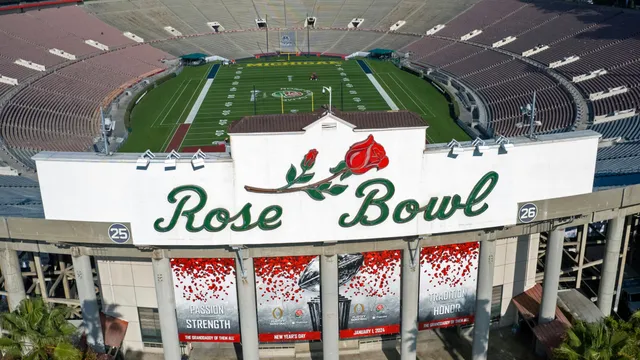
US proposes 14 stadiums for 2031 Women’s World Cup
US proposes 14 stadiums for 2031 Women’s World Cup
- The United States Soccer Federation proposed a total of 36 cities across the U.S., Mexico, Costa Rica, and Jamaica for the 2031 Women's World Cup, including 14 American sites.
- The bid aims to attract 4.5 million fans and generate about $4 billion in revenue, indicating the significant economic potential of the tournament.
- The inclusion of multiple international collaborators in the bid underscores a commitment to geographic diversity and equitable hosting arrangements.
Story
In a bid for the 2031 Women’s World Cup, the United States Soccer Federation put forth a plan including 14 stadiums across the U.S., with a total of 36 locations and 50 stadiums offered in collaboration with Mexico, Costa Rica, and Jamaica. The proposal highlights venues suitable for a tournament expected to feature 48 teams that could attract 4.5 million fans and potentially generate around $4 billion in revenue. This plan comes on the heels of FIFA's evaluation, culminating in a vote set for April 30 to confirm the venues. The U.S. sites incorporated in the bid include familiar NFL venues, while several other stadiums were mentioned as suitable for hosting the large-scale tournament. Notably, the bidding city list aligns with cities selected for the 2026 Men’s World Cup, ensuring infrastructure readiness and match efficiency, although some traditional venues like Chicago were omitted due to prior financial disputes with FIFA. Mexico's cities remain influential for the women's tournament, with stadiums in Mexico City, Guadalajara, and Monterrey suggested; Kingstons in Jamaica and San José in Costa Rica also feature prominently. Stakeholders anticipate that this Women’s World Cup could be the most lucrative yet, eclipsing previous tournaments in terms of revenue streams from ticket sales, marketing, and sponsorship. Proposed ticket pricing ranges from accessible lower tiers at $35 to more exclusive seating for finals priced between $120 to $600, indicating an effort to accommodate a diverse audience while maximizing profit. The bid book indicates a strategic approach towards fostering diversity and representation throughout the tournament, with an emphasis on ensuring that a range of cities is considered, enhancing the visibility of women's soccer on a global scale. The ongoing collaboration between U.S. Soccer and its partners aims to uphold inclusive hosting standards while driving the best outcomes for the tournament's overall success.
Context
trends insight global global impact economic policy data market strategic economic shift trends market impact data data data impact impact geopolitical economic strategic shift policy market data global shift insight trends economic economic trends geopolitical shift economic strategic geopolitical market market global market policy market analysis impact market data data policy economic economic market economic market global strategic strategic shift market impact analysis insight trends insight economic economic trends policy policy insight shift data policy policy economic global impact trends...


