

AI threatens 90% of jobs by 2032, warns Cognizant
AI threatens 90% of jobs by 2032, warns Cognizant
- Ollie O'Donoghue presented data showing that 93% of jobs are now AI-capable.
- Even traditionally secure jobs like plumbing are affected, with many tasks becoming automated.
- The integration of AI is expected to reshape work rather than eliminate it, creating new opportunities.
Story
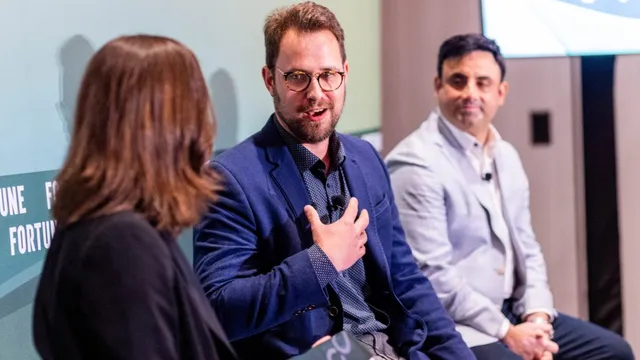
In Scottsdale, Arizona, during Fortune's COO Summit, Ollie O'Donoghue, head of research at Cognizant, revealed alarming data about the impact of artificial intelligence on the job market. The analysis indicated that 93% of jobs are now capable of being performed by AI, with 30% of these jobs facing significant changes. This projection, initially set for 2032, has been reached six years early, in 2026. O'Donoghue emphasized that even traditionally secure professions, such as plumbing and electrical work, are not immune to AI's influence. While these roles will still require human intervention for physical tasks, many surrounding activities, including diagnosis and paperwork, could be increasingly automated or assisted by AI technologies. The implications of this shift are profound, as O'Donoghue noted that the integration of AI into manual labor is transforming the nature of work. For instance, a multimodal reasoning agent could identify a leak, create a repair plan, and generate necessary documentation, thereby reshaping the value added by human workers. Despite concerns about job losses due to AI-driven efficiencies, Sushant Warikoo, Cognizant's chief business officer of AI, argued that the technology is more likely to reshape existing roles rather than eliminate them entirely. He believes that AI will uncover new opportunities and value pools that are currently not visible, leading to social and economic development. However, the transition to this new landscape may not be immediate. Warikoo pointed out that the pace of job creation will depend on how well individuals and organizations adapt to technological changes and reimagine their work processes. He highlighted that the remaining 80% of jobs will require significant change management and a rethinking of operational models to fully embrace AI's potential. This shift is not just about altering job functions; it is about fundamentally changing how organizations operate, how employees collaborate, and how businesses are structured. As the world moves towards this AI-integrated future, the need for workers to adapt and learn new skills becomes increasingly critical. The conversation around AI's impact on the workforce is ongoing, and while there are fears of job displacement, there is also a recognition of the potential for new roles and opportunities to emerge as industries evolve.
Context
The future of work with AI is a rapidly evolving landscape that promises to reshape industries, redefine job roles, and enhance productivity. As artificial intelligence technologies continue to advance, organizations are increasingly integrating AI into their operations, leading to significant changes in how work is performed. This integration is not merely about automation; it encompasses a broader transformation in the workplace, where AI acts as a collaborator rather than a replacement for human workers. The potential for AI to augment human capabilities is vast, enabling employees to focus on more strategic and creative tasks while AI handles repetitive and data-intensive activities. This shift is expected to lead to a more skilled workforce, as employees will need to adapt to new tools and technologies that enhance their productivity and decision-making processes. Moreover, the impact of AI on job creation and displacement is a critical aspect of this transformation. While some jobs may become obsolete due to automation, new roles are emerging that require a blend of technical skills and human-centric capabilities. For instance, jobs in AI development, data analysis, and AI ethics are on the rise, reflecting the need for professionals who can navigate the complexities of AI technologies. Additionally, industries such as healthcare, finance, and manufacturing are witnessing the creation of hybrid roles that combine human intuition with AI-driven insights, leading to improved outcomes and efficiencies. As a result, the workforce will need to embrace lifelong learning and continuous skill development to remain relevant in an AI-enhanced job market. The workplace environment itself is also undergoing significant changes due to AI. Remote work, which gained momentum during the COVID-19 pandemic, is being further supported by AI tools that facilitate collaboration and communication among distributed teams. AI-driven platforms are enabling seamless project management, virtual meetings, and real-time feedback, fostering a more flexible and dynamic work culture. This shift not only enhances employee satisfaction but also allows organizations to tap into a global talent pool, breaking geographical barriers. However, this new way of working also raises important considerations regarding data privacy, security, and the need for ethical guidelines to govern AI usage in the workplace. In conclusion, the future of work with AI presents both opportunities and challenges. Organizations must navigate this evolving landscape by investing in employee training, fostering a culture of innovation, and ensuring ethical AI practices. As AI continues to advance, it is crucial for businesses to remain agile and responsive to the changing needs of their workforce. By embracing AI as a partner in the workplace, organizations can unlock new levels of productivity and creativity, ultimately leading to a more prosperous and inclusive future of work.


