

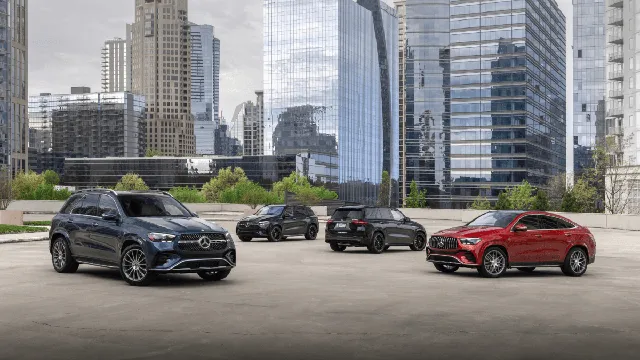
Mercedes-Benz focuses on technology overhaul instead of redesigns
Mercedes-Benz focuses on technology overhaul instead of redesigns
- Mercedes-Benz has enhanced the S-Class, GLE, and GLS models with significant technological upgrades.
- This decision comes amid shifting consumer interests towards battery-electric vehicles and economic uncertainty.
- The company aims to maintain sales success by prioritizing technology over aesthetic redesign.
Story
In a strategic decision made by Mercedes-Benz, the company has opted to place a greater emphasis on technological advancements rather than undergoing complete platform and design overhauls. This decision is reflected in their recent enhancements to the S-Class, GLE, and GLS models, which received significant technological upgrades but minimal aesthetic changes. Chairman of the Board of Management of Mercedes-Benz Group AG, Ola Källenius, articulated this shift, emphasizing that instead of extending the current generational designs, they have implemented substantial technological improvements to meet evolving customer needs. This move comes in a challenging market, where automakers globally face shifting consumer interests towards battery-electric vehicles and economic uncertainty. Mercedes-Benz's decision diverges from the typical model refresh, which usually incorporates a visual makeover and serves as a precursor to a new generation. Instead, they have chosen to focus on enhancing the 'heart and brain' of their vehicles, equipping them with advanced systems powered by supercomputers from leading technology companies like NVIDIA and Qualcomm. The context behind this shift is related to the current trends in consumer technology adoption, especially the growth of software-defined vehicles. As customer preferences change, Mercedes-Benz aims to ensure all its models, regardless of powertrain type, benefit from the latest technological solutions. The inauguration of their new MB OS vehicle operating system reflects an overarching strategy to provide customers with a high-tech experience centered around critical features like advanced driver assistance systems and smart cockpit functionalities. Through these technological enhancements, Mercedes-Benz seeks to remain competitive and appealing to diverse customers, aiming to adapt to varying market demands during a transitional phase for the auto industry. As the global landscape of automotive sales and consumer expectations evolve, this strategy may position Mercedes-Benz favorably for continued success in the vehicle market, particularly as it navigates through the post-pandemic economic recovery.


