

Foreign companies charged in preventable Baltimore bridge disaster
Foreign companies charged in preventable Baltimore bridge disaster
- Federal prosecutors announced charges against two foreign companies for their role in the Francis Scott Key Bridge collapse.
- The charges include conspiracy and obstruction, correlating with allegations of safety violations and operational failures.
- The indictment emphasizes the importance of accountability in the maritime industry to prevent future tragedies.
Story
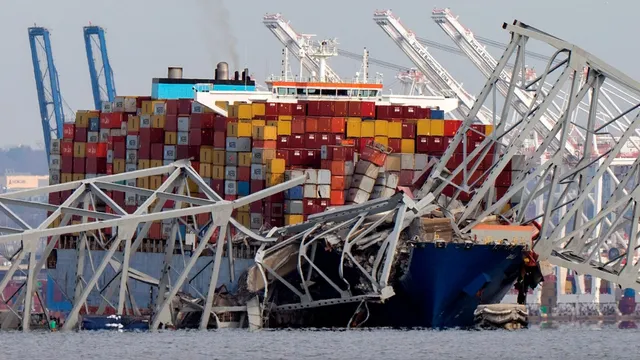
In March 2024, the Francis Scott Key Bridge in Baltimore collapsed after the container ship MV Dali lost power and struck a support column, resulting in six fatalities among construction workers. Federal prosecutors have indicted two foreign shipping companies, Synergy Marine Pte Ltd and Synergy Maritime Pte Ltd, along with the ship's technical superintendent, Radhakrishnan Karthik Nair, on multiple charges including conspiracy and obstruction. This tragedy has raised significant concerns regarding foreign-flag vessels operating in U.S. waters and the enforcement of maritime safety regulations. Investigators determined that the companies allowed the vessel to sail despite known electrical faults that had caused previous blackouts. Allegations indicated that cost-cutting measures led to unsafe operational conditions, ultimately resulting in the ship's inability to regain power following a second blackout that occurred shortly after departing from Baltimore harbor. The vessel's failings were attributed to modifications made to the fuel-supply system, which rendered it incapable of automatically restarting after losing power. The collapse had dire environmental consequences, as it released pollutants into the Patapsco River and the Chesapeake Bay, causing an estimated economic loss exceeding five billion dollars. Authorities, including U.S. Attorney Kelly Hayes and FBI officials, emphasized that the disaster highlighted systemic failures in maritime safety oversight, calling for a reckoning in the industry to ensure that similar tragedies do not occur in the future. The case signals increased scrutiny of foreign-flag shipping practices and the need for accountability for maritime safety violations. As the defendants face federal prosecution in Maryland, the indictment has been described as a critical step toward justice for the victims of this preventable disaster. Legal representatives for the families of the deceased workers express optimism that this legal action will bring accountability and foster improvements in safety regulations to prevent such incidents in the future.
Context
Maritime safety regulations in the United States are governed by a comprehensive framework that prioritizes the prevention of maritime accidents and the protection of life at sea. The framework is primarily developed and enforced by the U.S. Coast Guard, which adheres to international standards while addressing specific national concerns. Key regulations include those related to vessel construction, equipment requirements, operational procedures, and training for crew members. Compliance with these regulations is essential for ensuring the safety of both commercial and recreational maritime activities. These standards are further enhanced through partnerships with various stakeholders, including federal agencies, industry representatives, and safety organizations, to promote a culture of safety across all maritime sectors. The implementation of the Maritime Transportation Security Act (MTSA) in 2002 marked a significant enhancement of security measures within the U.S. maritime domain. The MTSA established requirements for port security, facility and vessel security plans, and the assessment of security risks. In addition to security-focused regulations, the U.S. has also embraced a proactive approach to environmental protection through the Oil Pollution Act and regulations enforced by the Environmental Protection Agency (EPA). These regulations impose strict penalties for oil spills and other environmental violations, ensuring that maritime operators take necessary precautions to prevent pollution and respond effectively to incidents. Training and certification of maritime personnel are crucial to maintaining safety standards on the water. The U.S. Coast Guard requires that crew members of commercial vessels undergo formal training and obtain appropriate certification, as established under the Standards of Training, Certification, and Watchkeeping (STCW) Convention. This ensures that all personnel are adequately prepared to respond to emergencies and manage operations safely. Furthermore, the Coast Guard regularly conducts inspections and audits of vessels to ensure compliance with safety regulations, thereby reducing the likelihood of accidents caused by human error or inadequate equipment. In recent years, advancements in technology have also played a significant role in improving maritime safety. The incorporation of electronic navigation systems, automated vessel tracking, and enhanced communication tools has transformed how vessels operate and interact with each other and shore-side authorities. The Coast Guard continues to adapt regulations in response to these technological developments to ensure that safety protocols remain relevant and effective. As we move forward, ongoing dialogue between regulatory bodies, industry, and maritime stakeholders will be essential to continuously refine and enhance safety regulations that protect lives and preserve maritime resources.


