

Severe winter rain exacerbates humanitarian crisis in Gaza
Severe winter rain exacerbates humanitarian crisis in Gaza
- Winter rain has caused significant flooding in Gaza Strip displacement camps.
- Over a dozen people have died from cold and collapsing structures since mid-December.
- The humanitarian aid provided is falling far short of the needs in Gaza.
Story
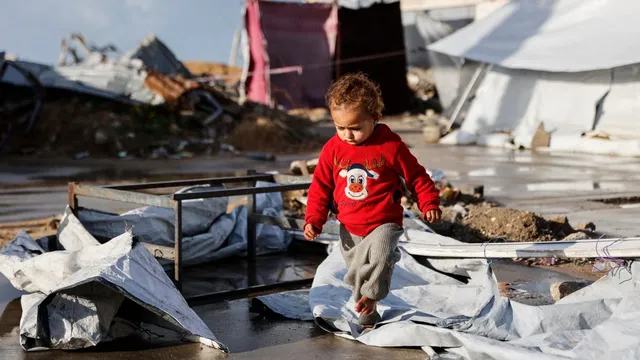
In the Gaza Strip, winter rain over the recent weekend led to significant flooding in camps housing Palestinians displaced by two years of conflict. Many of these individuals have been living in tents that are rapidly deteriorating. In the southern city of Khan Younis, people struggled to stay dry, as blankets got soaked and clay ovens used for cooking were inundated with water. Displaced families are facing severe challenges; a resident described their living situation, indicating that they woke up to find water inside their tent and voiced their exhaustion and desperation for proper bedding. Tragically, the Health Ministry reported that since December 13, at least 12 people, including an infant, have lost their lives as a result of hypothermia or the collapse of their homes, which were already compromised by the ongoing war. Since the ceasefire began, the toll has reached 71,266 Palestinian deaths, with 414 killed and 1,142 wounded in Gaza. The existing humanitarian support has been grossly insufficient, as aid organizations claim deliveries are falling short of the needs outlined under the U.S.-brokered ceasefire. An analysis of data shows that while the Israeli military reported 4,200 trucks with aid and additional sanitation support entering Gaza, the number of tents provided remains inadequate against the rising demands. The estimated requirement far exceeds the supplies, highlighting the urgency for immediate and comprehensive humanitarian interventions in Gaza, where nearly 80% of residential structures have been damaged or destroyed.
Context
The Gaza humanitarian crisis has reached critical levels as of December 2025, following years of ongoing conflict and blockade. The population of Gaza, exceeding two million, faces severe shortages of basic necessities including food, clean water, and medical supplies. According to recent assessments, approximately 60% of the population is food insecure, with many families relying on humanitarian aid for survival. The blockade has severely restricted the flow of goods into the region, exacerbating the already dire situation. Health services are under immense pressure, with hospitals struggling to cope with the influx of patients suffering from injuries related to conflict, as well as chronic health conditions due to lack of access to care and medicines. The World Health Organization has highlighted that essential medical supplies and equipment are critically low, leading to significant public health risks, including the resurgence of preventable diseases. The economic collapse of Gaza has further compounded the humanitarian crisis, with unemployment rates soaring above 50%. Economic opportunities are severely limited due to restrictions on movement and trade. Many families are living below the poverty line, leading to increased reliance on aid agencies for essential services. Infrastructure is in ruins, as decades of conflict have left much of Gaza's housing, sanitation, and education systems severely damaged or non-functional. The blockade, coupled with intermittent military escalations, has hampered any substantial recovery efforts. Humanitarian organizations continually call for increased international support and funding to address the immediate needs of the population and to facilitate effective recovery initiatives. In light of the deteriorating conditions, calls for a ceasefire and diplomatic negotiations have intensified. Numerous international bodies, including the United Nations, are urging parties involved to prioritize the welfare of civilians trapped in the conflict and to address the root causes of the humanitarian disaster. Civil society organizations within and outside Gaza are mobilizing to raise awareness about the plight of the Gazan people, lobbying for an end to the siege and for meaningful peace negotiations that consider the rights and needs of all affected parties. Without urgent and sustained international intervention, the prospects for the people of Gaza remain grim. Humanitarian aid flows must be increased, and access to essential goods and services must be guaranteed to prevent further deterioration of the situation. It is critical for the global community to come together to facilitate dialogue and develop long-term solutions that end the cycle of violence and oppression, promoting peace and stability in the region.


