

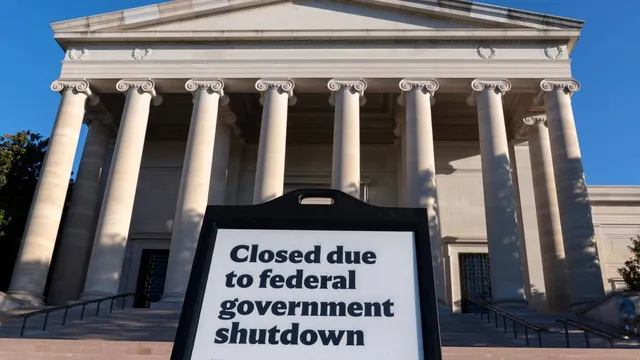
Government shutdown ends, but recovery may take time
Government shutdown ends, but recovery may take time
- Federal workers suffered financial hardship, missing about $16 billion in wages due to the shutdown.
- Transportation Secretary Sean Duffy assured that air traffic controllers will receive 70% of their back pay shortly after the shutdown ended.
- The conclusion of the shutdown marks the beginning of a complicated recovery process for numerous affected sectors.
Story
The United States recently experienced the longest government shutdown in its history, which officially concluded recently. During this period, approximately 1.25 million federal workers went without pay, leading to an estimated $16 billion in missed wages. Many workers were either furloughed or worked without compensation across various federal agencies. This shutdown significantly impacted various sectors, including aviation, where unpaid air traffic controllers faced financial pressures that led to significant flight disruptions. As the shutdown ended, federal operations began to resume, but the reopening process will not be immediate. Transportation Secretary Sean Duffy confirmed that air traffic controllers and other Federal Aviation Administration (FAA) employees would receive 70% of their back pay within 24 to 48 hours, while the remaining payment would follow soon after. Additionally, states were working quickly to ensure that millions of people who missed their monthly SNAP (food stamp) benefits would start receiving their payments again, although this could take up to a week. The effects of the shutdown also reached social programs such as Head Start, where the distribution of federal grant payments was stalled. Many affected centers managed to stay operational by relying on emergency reserves or furloughing parts of their staff. The Office of Head Start plans to expedite funding and communicate closely with the impacted programs regarding timelines for when they can expect federal money. Despite the shutdown's conclusion, experts are cautious about the time required for a full recovery. Government employees, particularly those in critical roles, faced delays in receiving back pay, which disrupted their ability to meet financial obligations. The delays had ripple effects, forcing some workers to struggle with late fees or fall into debt. As the systems restore operations, there are ongoing concerns regarding employee morale and the consequences of the shutdown on essential services across the nation.
Context
Government shutdowns in the United States are typically caused by a failure to reach agreement on budgetary matters between Congress and the President. These agreements are essential for funding government operations, and when a consensus cannot be reached, it leads to a lapse in appropriations, forcing many federal offices and services to close or operate with limited capacity. The process begins with the President submitting a budget request to Congress, which then deliberates and drafts spending bills. Disputes may arise regarding funding levels for specific programs, fiscal policies, or political priorities, leading to a standoff that can culminate in a shutdown when the new fiscal year begins without a budget agreement in place. Several factors contribute to the likelihood of a government shutdown. Partisan divisions in Congress play a critical role, as members may refuse to compromise on issues that are fundamentally important to their political platforms. For example, disagreements over issues such as healthcare, immigration, and social spending can lead to an impasse. Furthermore, the use of budgetary tactics, such as filibusters and conditional appropriations, can exacerbate these divisions, making it challenging to pass funding legislation. Additionally, the increasing reliance on continuing resolutions to maintain government funding has created a pattern where short-term solutions may lead to long-term instability and increased potential for shutdowns. The repercussions of a government shutdown can be significant and far-reaching. Federal employees may be furloughed, resulting in lost wages and disruption of services. Programs critical to public health and safety may be halted, impacting citizens who rely on government services. Economic effects can also ripple through the economy, as shutdowns can reduce consumer confidence and disturb markets. The last-minute nature of negotiations to prevent a shutdown often contributes to uncertainty, leading to businesses pausing or altering their operations in anticipation of potential government disruptions. Ultimately, government shutdowns are a reflection of deeper issues within the political discourse in the United States. They highlight the challenges of governance in a deeply polarized environment and demonstrate the difficulties parties face in coming together to address pressing fiscal matters. Moving forward, there is potential for reforms aimed at the budget negotiation process that may help mitigate the frequency and severity of such shutdowns. Increased bipartisanship and a commitment to collaborative governance are essential for overcoming these periodic crises, ensuring that the government can function effectively and meet the needs of the American public.


