

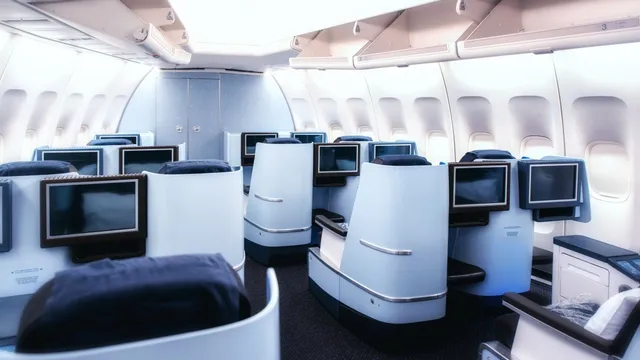
Delta Air Lines plans to expand basic ticket options for premium seating
Delta Air Lines plans to expand basic ticket options for premium seating
- Delta Air Lines plans to launch a new ticket tier known as Delta Comfort Basic, allowing premium seat accessibility at lower prices.
- The new tier comes with restrictions, including non-refundable tickets and no upgrade options.
- The airline aims to provide diverse choices for customers based on their willingness to pay, with a full rollout expected in 2026.
Story
In January 2023, Delta Air Lines introduced a new ticketing tier aimed at providing more affordable options for flying in business or first class. This initiative allows customers to enjoy premium features such as extra legroom and complimentary drinks at a lower price point, as long as they are willing to accept certain restrictions, such as non-refundable tickets and the inability to upgrade. The new offering, referred to as 'Delta Comfort Basic', was initially tested on select flights since November 2022. Glen Hauenstein, Delta's president, noted that the airline would broaden this tier to include all seats in 2026. As Delta evolves its ticketing strategy, it aims to cater to a wide spectrum of customer preferences and budgets. The pricing structure for the new tier highlights that passengers could benefit from discounts of $50 off the standard fare if they are willing to take on some limitations. Hauenstein emphasized that providing customers with choice supports their business model by meeting diverse travel needs. The underlying goal is to innovate products that align with what customers are willing to pay, while also maintaining the core features some travelers prioritize. Joe Esposito, Delta's EVP, explained that the airline is carefully testing the 'Delta Comfort Basic' option before rolling it out across more seats and services. This cautious approach is essential to ensure a seamless integration of the new offerings into their existing product lineup. The trial phase of Delta Comfort Basic has proven successful, and feedback from customers will help refine the program further. As Delta continues to innovate, it is essential that they remain attuned to both customer desires for premium experiences and the complexities of offering lower-priced ticketing options. As of January 2023, Delta's ongoing adjustments reflect broader trends in the airline industry, where competition drives the need for strategic pricing and varied offerings. Delta's commitment to expanding its ticket categories signals a significant shift in how airlines may manage premium seating moving forward, aiming to balance affordability with exceptional service quality.
Context
Airline ticket pricing strategies are critical for airlines to manage revenues effectively and maximize profitability. Due to the nature of the airline industry, which is characterized by high fixed costs and variable demand, airlines have adopted various pricing strategies to attract different segments of travelers. These strategies include dynamic pricing, fare segmentation, and promotions. Dynamic pricing, which adjusts ticket prices based on real-time demand and advance purchase timing, allows airlines to optimize revenue per flight. By leveraging sophisticated algorithms and data analytics, airlines can predict consumer behavior and adjust prices accordingly, ensuring that they fill seats while maximizing revenue. Fare segmentation involves categorizing passengers based on various factors, such as booking class, refundability, and flexibility. By offering a range of prices for the same flight, airlines can cater to business travelers who tend to book at the last minute and are willing to pay a premium, as well as leisure travelers who are more price-sensitive and plan ahead. Promotions and discounts are also frequently used to stimulate demand during low seasons or to fill seats on flights that may not be performing well. The careful balance of these strategies ensures that airlines can maintain competitiveness while striving for profitability. The rise of online travel agencies (OTAs) and meta-search engines has impacted traditional pricing strategies significantly. Airlines must now compete not only with one another but also with third-party platforms that aggregate prices for consumers. As a result, transparency in pricing has increased, and airlines are often compelled to adjust their strategies to remain appealing to price-sensitive travelers. Additionally, the introduction of ancillary fees (such as baggage fees and seat selection charges) has become a prevalent way for airlines to enhance revenue beyond the ticket price. In summary, effective airline ticket pricing strategies are essential for managing the complex interplay of demand, competition, and operational costs in the airline industry. With constantly evolving market conditions and consumer behavior, airlines must continuously refine their pricing approaches to optimize revenue without alienating customers. The ability to adapt quickly to changes, leverage data for forecasting, and implement tiered pricing will be key factors in the continued success of airline revenue management.


